Kerala celebrates an unusually dense calendar of temple festivals. From one of the world's largest annual pilgrimages at Sabarimala to the intimate family kavu Theyyam that takes place in a single night for a single household — the Kerala festival calendar is an unbroken, living stream of sacred celebration spanning all 365 days of the year.
These festivals are not entertainment — they are annual re-consecrations. Each festival re-establishes the covenant between the deity and the community, renews the ritual energy of the sacred space, and provides devotees with a specific window of heightened divine accessibility that cannot be replicated in ordinary darshan. Understanding what each festival is, why it happens at its specific season, and what it means theologically and astronomically transforms the experience from spectacle into genuine pilgrimage.
ഓരോ ഉത്സവവും ഒരു ദൈവ-ഭക്ത ഉടമ്പടിയുടെ പുനഃസ്ഥാപനമാണ്. ഈ ഗൈഡ് ഓരോ ഉത്സവത്തിന്റെയും ആഴം, ആചാരം, ജ്ഞാനം, ഐതിഹ്യം — ഇവ ഒരുമിച്ചു നൽകുന്നു.
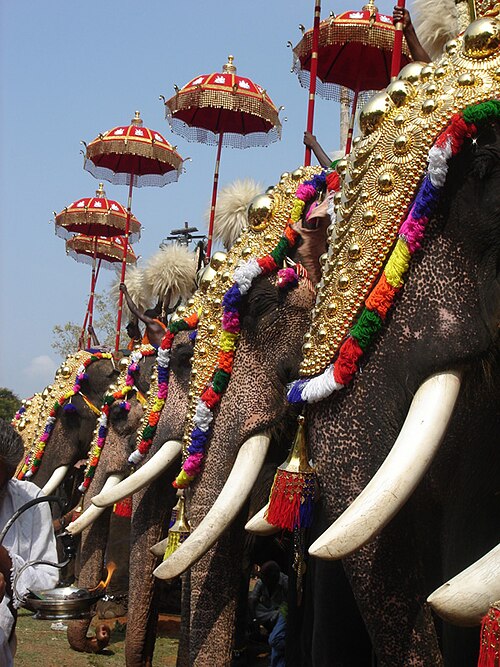
Thrissur Pooram
തൃശൂർ പൂരം: വർണ്ണവിസ്മയങ്ങളുടെ വിശ്വോത്സവംThrissur Pooram is not merely a festival — it is the annual democratic assembly of Kerala's gods. Ten deities from ten surrounding temples converge at Vadakkumnathan (the ancient Shiva temple at Thrissur's heart) in a 36-hour spectacle of caparisoned elephants, percussion orchestras, and ceremonial parasols that stands without parallel anywhere on Earth. The festival was established by the Cochin King Sakthan Thampuran in the late 18th century as a unifying celebration that brought all of the region's temples and communities together under one sacred canopy.
The Kudamattam (parasol exchange) is the festival's most theatrical moment — the two opposing processions of Paramekkavu and Thiruvambadi temples compete in an elaborate visual art of switching multicoloured ceremonial parasols in perfect synchrony atop their elephants, set to the thundering beat of Panchari Melam. The number and variety of parasols, fans and yak-tail whisks (venchamaram) carried — and the speed and precision of the exchange — are the subject of intense artisanal pride and years of preparation.
The pre-dawn Vedikettu (fireworks display) that ends the festival — erupting simultaneously from two competing camps in the darkness before sunrise — is one of India's most dramatic ritual moments: darkness and fire, silence and explosion, the old night meeting the new dawn as ten gods return to their shrines.
✦ Key Facts & Pilgrimage Guide
Pooram is a Tantric protocol for collective re-energisation of an entire region's sacred field. When ten deities assemble at the centre with their full retinue of ritual sound (melam), sacred imagery (parasols and fans) and community devotion, they create a combined atmosphere of devotion that, in the tradition's understanding, renews the sanctity of the place for the coming year. The percussion itself — Panchari Melam — builds through successively faster tempos over its full cycle, a structure many listeners describe as moving from calm attention to excitement.
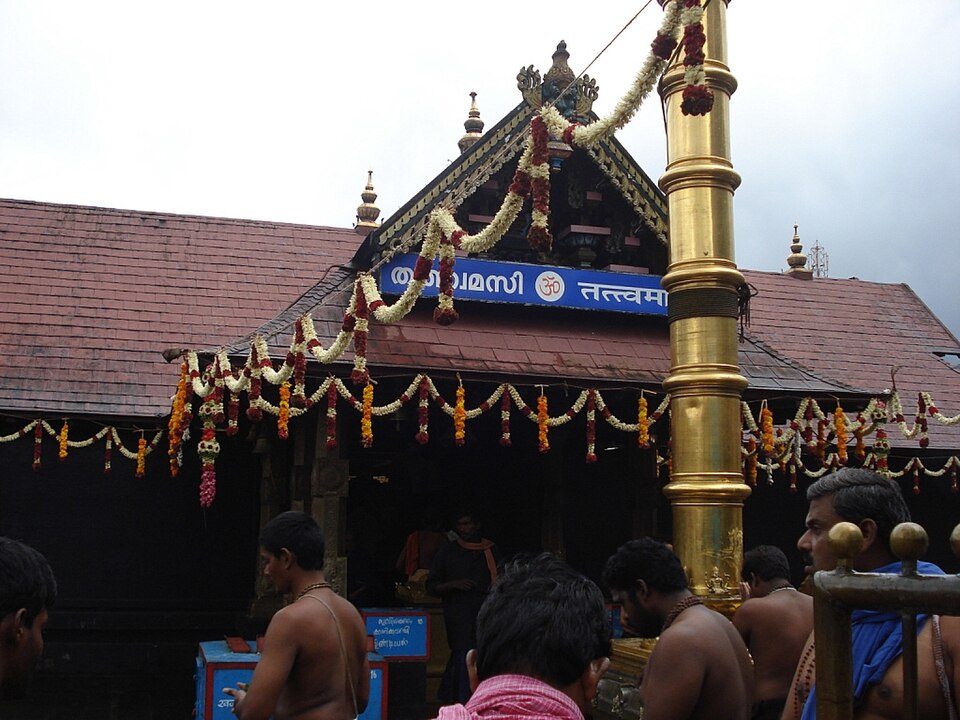
Sabarimala Pilgrimage
Sabarimala is one of the largest annual pilgrimage centres in the world, attracting millions of devotees to the sacred shrine of Lord Ayyappa situated deep within the forests of the Western Ghats in Kerala.
The pilgrimage season extends from November to January and culminates during Makara Vilakku, when the hill shrine witnesses extraordinary spiritual gatherings, rituals, and traditional observances.
Sabarimala Mandala Makaravilakku
ശബരിമല മണ്ഡലം–മകരവിളക്ക് — ലോകത്തിലെ ഏറ്റവും വലിയ വാർഷിക തീർത്ഥാടനംSabarimala's annual season draws between 50 and 70 million pilgrims in a two-month window — making it the single largest annual peaceful gathering of human beings on Earth by most estimates. The Mandala season (41 days from Karthika) culminates in the Makaravilakku on the night of Makara Sankranti (January 14–15) — when a celestial star (Makarajyothi) appears in the night sky precisely as a sacred fire simultaneously appears on the summit of Ponnambalamedu hill, 6 km distant.
Every aspect of this pilgrimage is a precisely calibrated Tantric preparation protocol. The 41-day deeksha (fasting, celibacy, twice-daily ritual bathing, wearing of rudraksha beads and the blue-or-black costume, abstinence from all intoxicants) creates a comprehensive biochemical, neurological and spiritual reset in the practitioner's body. When the transformed pilgrim finally climbs the 18 sacred steps and enters the sanctum, they do not arrive as an ordinary visitor — they arrive as a consecrated vessel.
The Pathinettam Padi (18 steps) that lead to the sanctum are among India's most theologically dense ritual structures. Each step is associated with one of 18 hills surrounding Sabarimala, one of 18 weapons of Ayyappa, and one of 18 Puranas — making the climb a compressed journey through the entire cosmological landscape of the tradition.
✦ Pilgrimage Essentials
The simultaneous appearance of the Makarajyothi star in the sky and the sacred fire on Ponnambalamedu at the precise moment of Makara Sankranti is the festival's theological climax. This is Kerala's most sacred astronomical-ritual intersection — the universe itself participating in the festival. Millions of pilgrims witnessing this moment from the temple hillside report an overwhelming collective emotional experience that cannot be manufactured or replicated.
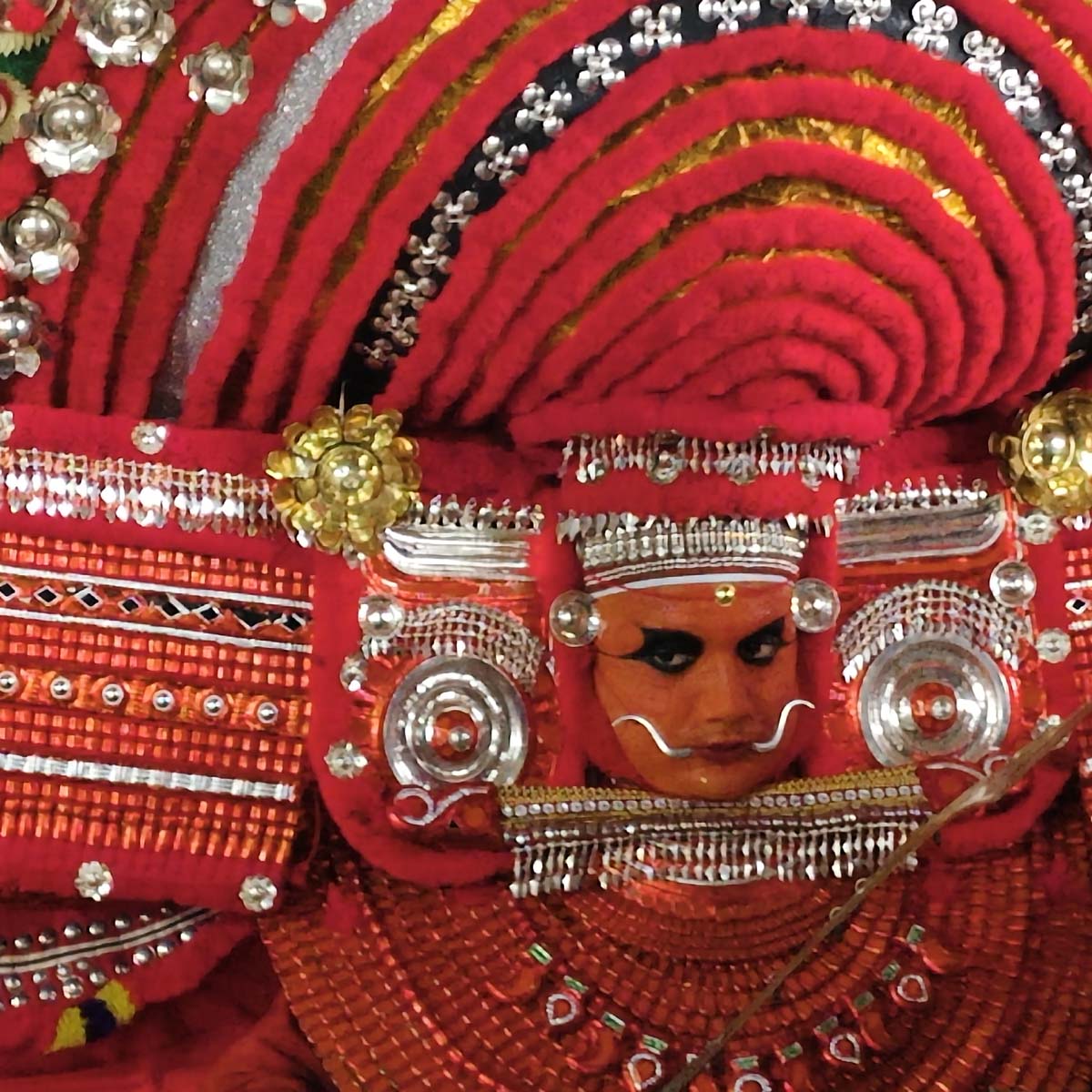
Theyyam — The Season When Gods Walk
തെയ്യം — ദൈവം ജനങ്ങളിലേക്ക് ഇറങ്ങി വരുന്ന കാലംTheyyam is unlike any other religious practice on Earth. In over 400 distinct forms performed across North Kerala's kavu shrines, trained performers undergo hours of elaborate face-painting (chutti), towering crown-building (mudi), and rhythmic ritual invocation — and then the deity arrives. The performer does not represent the deity — in the theological and lived understanding of the tradition, the deity genuinely inhabits the performer's body and speaks to the assembled community.
A Theyyam walks among the devotees, addresses them by name, speaks to their concerns, blesses their families, consumes fish and toddy (at Muthappan), and grants prophecies. The oracle function of Theyyam — the deity speaking directly to community members — is a form of participatory sacred practice that no other temple tradition offers with such immediacy and personal access.
Theyyam is also a profound act of social theology. Most Theyyam performers are from communities historically classified as lower castes — yet during the performance, upper-caste devotees prostrate before the deity they embody. The divine temporarily inverts the social hierarchy, enacting the theology that before the deity, all are equal.
✦ How to Experience Theyyam
Theyyam forms include Vishnu-forms (Vishnumoorthi, Raktha Chamundi), Shiva-forms (Pottan, Gulikan), hero-deities (Thacholi Othenan's kavu), nature-deities (Wayanattu Kulavan — forest spirit), and cross-community folk-deity forms that dissolve caste, gender and religious identity. Attending a tharavadu (family) Theyyam — where the deity speaks directly to each family member — is infinitely more powerful than a large public performance. Plan for both.
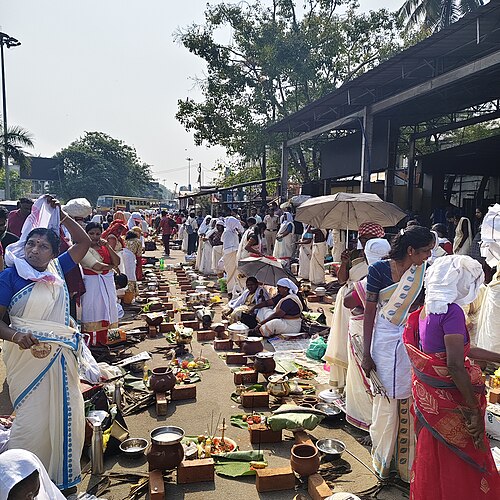
Attukal Pongala
ആറ്റുകാൽ പൊങ്കാല — ലോകത്തിലെ ഏറ്റവും വലിയ സ്ത്രീ ഭക്ത സംഗമംFor one day each year, the entire city of Thiruvananthapuram is transformed into a single vast kitchen. Over 2.5 million women — earning this festival the Guinness World Record for the largest annual gathering of women for a religious purpose — cook pongala (rice porridge with jaggery and coconut) on open fires in the streets radiating out from Attukal Bhagavathy temple for kilometres in every direction.
The Pongala is not a symbolic ritual — it is the offering itself. Each woman sets up her own clay or metal pot on a small fireplace in the street, cooks the sacred food herself, and offers it directly to the Goddess. The collective act of millions of women cooking simultaneously creates something unprecedented — the streets filled with the combined warmth of millions of small fires, the collective sound of boiling pots and devotional song, and the overwhelming fragrance of rice and jaggery cooking in the open air of a city that has surrendered itself to the Goddess for a day.
The theological basis is the story of Kannagi — the epic Tamil heroine who arrived at Kerala's shores after her husband's unjust execution and was welcomed by the local Goddess. The Pongala re-enacts the preparation of food for Kannagi's arrival — millions of women hosting a goddess who fled injustice.
✦ Visitor Guide
The Pongala is one of the world's most powerful collective ritual events — not because of its scale alone, but because of its nature. Millions of individual acts of cooking and offering, each performed with personal devotion and intention, combine into a single collective prayer. The energy produced — millions of small fires, millions of simultaneous intentions toward the divine — creates something that participants consistently describe as an almost physical presence of the Goddess moving through the city.
Guruvayur Ekadasi & Utsavam
ഗുരുവായൂർ ഏകാദശി — ദക്ഷിണ ദ്വാരകയിലെ ഉത്സവ ശ്രേഷ്ഠംThe Guruvayur Ekadasi — the Ekadasi (11th lunar day) falling in the Malayalam month of Vrischikam — is the single most auspicious day of the year for Guruvayurappan's devotees. Lakhs of pilgrims converge, the temple stays open through the night, and the Gajendra Moksham (elephant liberation) episode is re-enacted in the form of a massive elephant procession before dawn — honouring the legendary elephant Gajendra whose liberation by Vishnu gave Guruvayur temple its sacred elephant tradition.
The Guruvayur Utsavam (10-day festival in February–March) is a celebration of classical arts — Krishnanattam (the classical dance drama depicting all 8 chapters of Krishna's life, performed only at Guruvayur), Ottanthullal, Harikatha and the grand elephant procession on the final night attract classical arts lovers from across Kerala.
Guruvayur temple's elephant sanctuary at Punnathur Kotta (60+ elephants) exists because of the Gajendra Moksha legend — Vishnu's rescue of the devotee-elephant enshrined the pachyderm as the deity's sacred companion forever. During festivals, the caparisoned temple elephants carry the deity's symbolic presence in procession — they are not decoration but active ritual participants.
Navaratri — Nine Nights of the Goddess
നവരാത്രി — ദേവിയുടെ ഒൻപത് രാവുകൾ, ജ്ഞാനത്തിന്റെ ഉത്സവംNavaratri in Kerala has a specific cultural character unlike any other state. The nine nights celebrate the three aspects of Devi — Durga (first 3 nights, power), Lakshmi (middle 3 nights, abundance) and Saraswati (final 3 nights, knowledge) — but Kerala adds its own dimension through the famous Saraswati Puja and Vidyarambham tradition.
On Saraswati Puja day (Ashtami), every house, school and temple in Kerala places all books, musical instruments, tools, and professional implements before the Goddess — declaring a complete puja ayudham (weapons rest). All learning pauses for one day to honour the source of all learning. On Vijayadasami (the tenth day), children are formally initiated into education — a parent or teacher guides the child's hand to write the first letters on a tray of rice — in one of India's most beautiful learning rituals.
At temples, Navaratri sees elaborately decorated kolu (tableaux of deities) and daily Devi puja sequences. Bhagavati temples hold special midnight pujas on Navami. The Saraswati temple at Panachikkad and Devi temples across Thrissur and Palakkad are particularly active during this season.
✦ Kerala Navaratri Guide
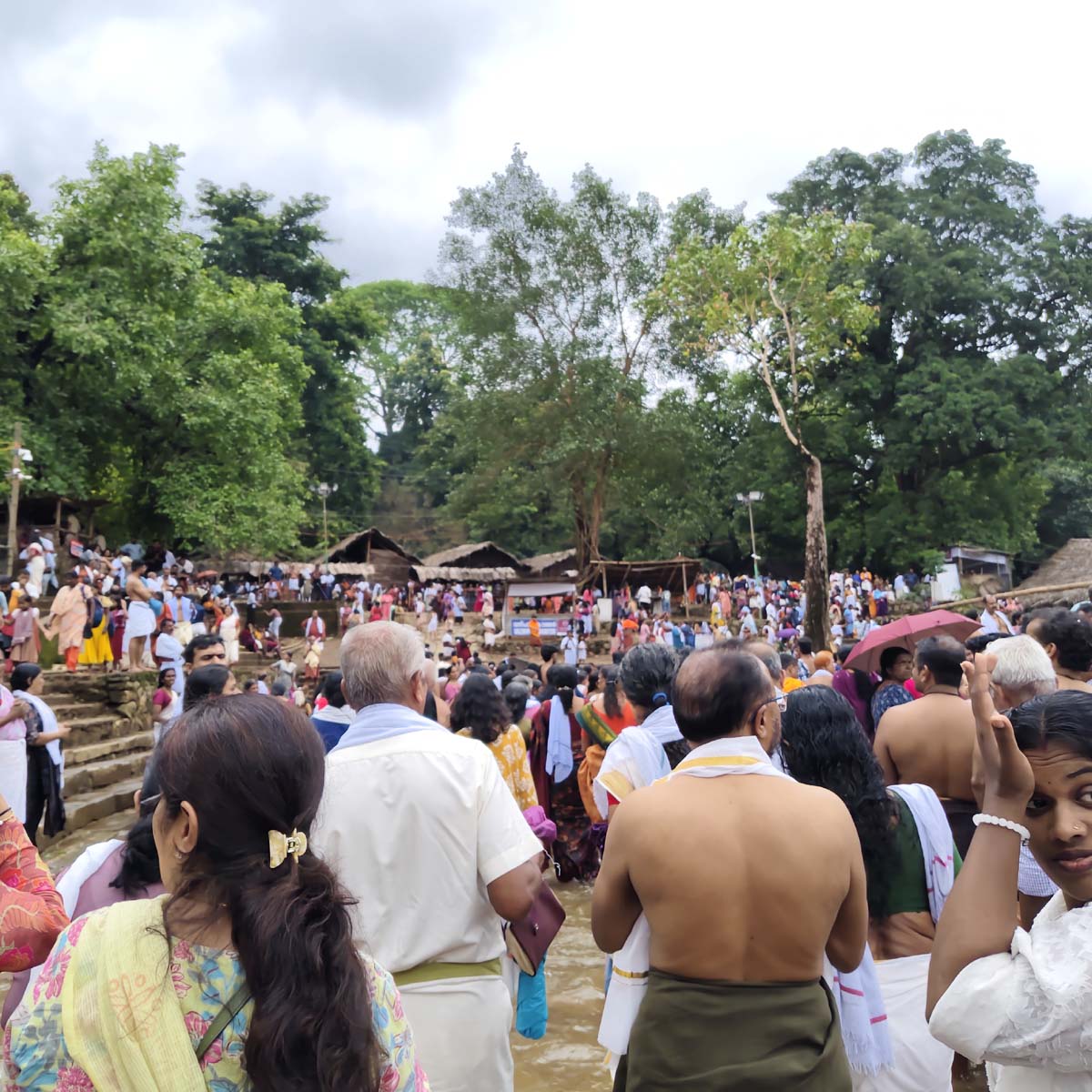
Kottiyur Vysakha Mahotsavam
കൊട്ടിയൂർ വൈശാഖ മഹോത്സവം — വൃക്ഷ-നദി-ആകാശ ദർശനംKottiyur is one of India's most extraordinary pilgrimage experiences — because there is no temple. A swayambhu (self-manifested) Shiva lingam in the deep Bavali forest valley is venerated only during the 27-day Vysakha Mahotsavam, which falls roughly between May and early July. For the rest of the year the temporary shrine on the east bank is dismantled and the Swayambhu lingam is not worshipped, while the permanent Ikkare Kottiyur temple across the river continues daily worship. The sacred site consists simply of the lingam, the forest, the sky and the river.
Pilgrims must wade across the Bavali river to reach the shrine — a ritual river crossing that marks the transition from ordinary space to sacred space. No footwear, no protection, just the cold river water and the forest path. The site is believed to be where Sati's earrings fell — making it one of Kerala's Shakti Peethas.
The strict purity protocols during the festival (complete vegetarianism, celibacy, bathing before entering the site) and the absence of any commercial infrastructure at the shrine itself make Kottiyur the most authentic forest pilgrimage experience in Kerala.
The theological statement of Kottiyur is radical: the divine does not need a building. The forest is the sanctum. The sky is the shikhara. The river is the theertham. For 27 days, the ancient understanding of sacred space — the deity present in nature itself — is restored. Then the forest reclaims it, and the deity rests again in silence.
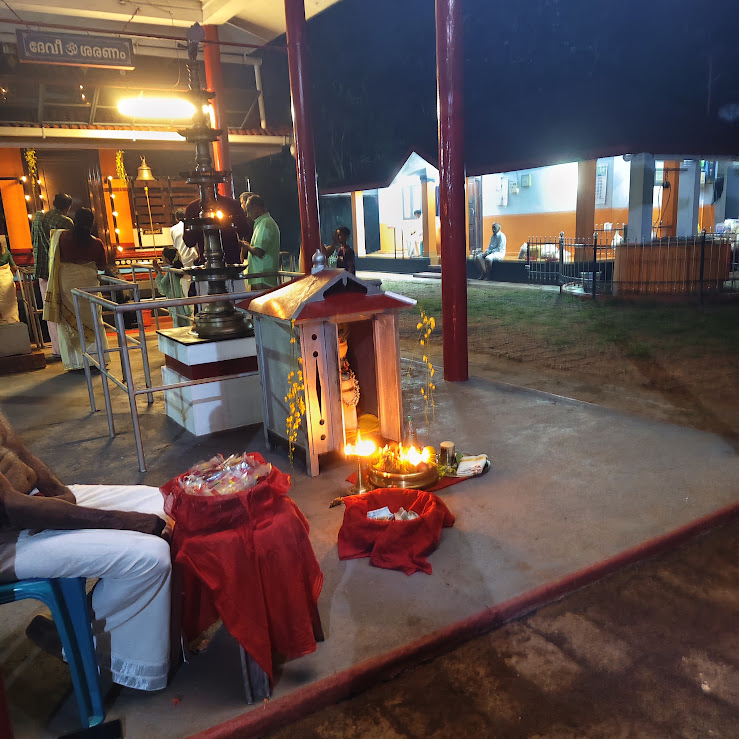
Vishu — Kerala's Astrological New Year
വിഷു — കേരളത്തിന്റെ ജ്യോതിഷ പുതുവർഷം, ഐശ്വര്യ ദർശനംVishu marks the sun's entry into Mesha (Aries) — the astronomical new year of Kerala's traditional calendar. Before dawn, the eldest member of each household arranges the Vishukkani — a sacred arrangement in a large bell-metal vessel (uruli) containing: a Vishnu idol, golden cucumbers (kani vellarikka), jackfruit, coconut, betel leaves, golden coins, a lit nilavilakku (lamp), and yellow konna flowers (Cassia fistula) — all yellow, representing gold and the sun's abundance.
On the auspicious moment of Vishu (calculated astronomically), the eldest wakes before dawn, lights the lamp before the Vishukkani, and then leads each family member — eyes closed — to the lamp and opens their eyes to the Vishukkani as their first sight of the new year. Seeing gold, beauty and the divine as your first sight of the new year is believed to ensure an abundant, auspicious year ahead.
At temples, special Vishu puja sequences at dawn draw massive crowds — Guruvayur, Padmanabhaswamy and all major Vishnu temples are particularly busy. The Vishukkaineettam — giving children money (vishukaineetam) — is the secular tradition that accompanies the sacred one.
Vishu is Kerala's astronomical festival — timed to the precise moment of solar entry into Aries, the first sign of the zodiac. This is the solar new year of the sidereal calendar, when the sun crosses the vernal equinox point as calculated in the traditional Indian astronomical system. The kanna flowers (konna in Malayalam) — blooming specifically at this solar transition — are the natural calendar that announces the new year's arrival without any calculation. Nature announces the festival; the festival honours nature.
Mahashivaratri
മഹാശിവരാത്രി — ശിവ-ശക്തി ദർശനത്തിന്റെ ഉത്തമ രജനിMahashivaratri — the Great Night of Shiva — is celebrated on the 14th night of the dark fortnight in Phalguna, when the moon is at its darkest. The theology is precise: Shiva is most accessible when the external world offers the least distraction. In the darkest, most inward-turning night of the month, the devoted wake all night in fasting, chanting and continuous abhishekam — meeting Shiva in the darkness where he eternally meditates.
Kerala's most extraordinary Shivaratri is at Aluva Manappuram — where the open sandbank of the Periyar river hosts thousands of worshippers under the open sky through the night, with no permanent structure, no walls, just the river, the darkness, the fire and Shiva. The four prahar (3-hour) puja sequences continue through the night — Shiva is bathed, dressed and worshipped four times, each time with different abhishekam substances corresponding to the night's four phases.
At Vadakkumnathan in Thrissur, the illuminated compound of Kerala's most architecturally refined Shiva temple creates a very different atmosphere — the same all-night vigil within a magnificent stone enclosure, accompanied by Sopanam music and the fragrance of thousands of ghee lamps.
Shivaratri celebrates the night Shiva stood between creation and destruction — the legend of the cosmic pillar of fire (Jyotirlinga) that appeared when Brahma and Vishnu disputed their supremacy. Shiva manifested as an infinite column of flame, and the dispute ended. Shivaratri is the annual remembrance of this infinite, boundless, formless reality — celebrated appropriately in darkness, fasting and silence.
Onam — The Temple Dimension
ഓണം — ക്ഷേത്ര ഉത്സവ ദർശനംWhile Onam is Kerala's state harvest festival celebrated by all communities, its temple dimension is specific and profound. Onam celebrates the annual return of the legendary King Mahabali (Maveli) from the netherworld (Patala) to which he was sent by Vamana (Vishnu's fifth avatar) — his return blessed by Vishnu as a gift for the king's supreme generosity.
The Thrikkakara temple (Ernakulam) — the only temple in Kerala specifically dedicated to Vamana — is the theological centre of Onam celebrations. Here, the Vamana idol is taken in a ceremonial procession (Athachamayam) on the first day of Onam (Atham nakshatra) — this procession, with its hundreds of elephants, traditional costumes and ceremonial arts, marks the official beginning of the 10-day Onam season.
In temples, the Thiruvonam puja is the year's most elaborate offering of food — a complete Sadya (feast) is offered to the deity before any household begins their Onam meal. The Aranmula Vallam Kali (boat race) is a temple votive offering during this same season. The Pookkalam (floral carpet) laid in homes and temple courtyards during Onam is a sacred art — each day's pattern using specific flowers with specific symbolic meanings.
Thiruvathira — The Night Shiva Was Born
തിരുവാതിര — ശിവ ജനന രജനിയും സ്ത്രീ ഭക്തിയുംThiruvathira is Kerala's most distinctly women's festival — observed on the Thiruvathira nakshatra in the Malayalam month of Dhanu (December–January). According to legend, Parvati fasted and prayed through this night to regain the love of Shiva after a period of separation. The festival celebrates the power of feminine devotion to awaken the divine masculine.
Women observe an all-night fast and vigil, performing the Kaikottikali (clapping dance) in circles — an ancient Kerala dance form performed only on this night by groups of women in white sarees, moving in rhythmic formation through the night. The dance is simultaneously aerobic, communal, devotional and meditative — a complete mind-body spiritual practice embedded in the festival.
In temples, special Shiva abhishekams are performed through the Thiruvathira night. The association with the renewal of love makes this festival particularly significant for married women — the night's fasting and prayer is dedicated to the health and longevity of the husband and the strength of the marital bond.
The Kaikottikali performed on Thiruvathira night is one of Kerala's oldest continuous dance traditions — performed by women in a moving circle, with clapping, singing of devotional songs (thiruvathira pattu) and synchronized footwork. The circular formation mirrors the pradakshina (circumambulation) of temple worship — collective female devotion expressed as sacred movement through the night.
More Major Kerala Temple Festivals
കൂടുതൽ ക്ഷേത്ര ഉത്സവങ്ങൾ — ജില്ലതോറുംKerala's festival landscape extends far beyond the famous ones. Every district, every major deity tradition and every season has its defining utsavam. Here are the festivals every serious pilgrim and temple visitor should know.
A temple festival famed for its large Panchari Melam ensemble of chenda (drum) players and other percussionists. The twin Mahadeva shrines (Irattappan) create an unusual acoustic landscape. Held in April–May in Peruvanam, 15 km from Thrissur. Many connoisseurs rate the melam here very highly.
UNESCO Intangible Cultural Heritage of Humanity — a ritual theatre performance at Bhagavati temples of Ernakulam and Thrissur districts, depicting Kali's victory over the demon Darika. Performed between July and October (Karkidaka to Kanni months). The elaborate face-painting, towering headgear and rhythmic enactment create one of the most visually overwhelming sacred theatre forms in Asia. Entry by invitation to temple compound.
Men dress in women's sarees and jewellery to carry lit lamps before the Goddess — one of India's most theologically radical and visually powerful ritual events. Held at Kottankulangara Devi Temple, Kollam in March–April. A profound Tantric statement: the Goddess accepts devotion from every form of human body. Photographed worldwide; the transgender community participates as honoured devotees.
Kozhikode and Malappuram's answer to Theyyam — Thira (also Tira) is the possession ritual tradition of South Malabar's Bhagavati temples. While less internationally known than Theyyam, Thira forms like Kurathi, Puthiya Bhagavathi and Chamundi are equally powerful in their local tradition. The performance season follows the same November–May window. The South Malabar Bhagavati traditions have distinct music, costuming and face-painting from North Kerala Theyyam.
The annual festival of the Vaikom Mahadeva temple — historically significant as the site of the Vaikom Satyagraha (1924–25), the landmark civil rights movement for temple access. Vaikom Ashtami (November–December) is one of South Kerala's most attended Shiva festivals, drawing lakhs of devotees to the ancient temple beside the Vembanad backwaters. The festival combines deep historical significance with living devotional tradition.
Kerala's most spectacular chariot festival — three elaborately decorated wooden temple chariots are pulled through the historic Tamil Brahmin agraharam (street settlement) streets of Kalpathi village, Palakkad. Held each November, the Ratholsavam attracts visitors from across India for its distinctive cultural authenticity — unchanged in format for centuries. The sight of the wooden chariot moving through the narrow agraharam street, flanked by houses unchanged for 200 years, is one of India's finest living heritage experiences.
One of India's most theologically radical festivals — devotees sing explicitly sexual and ribald songs in the temple compound before the fierce Bhagavati of Kodungallur. This is not irreverence but a Tantric protocol: the Goddess in her Kali-form accepts the totality of human experience, including what polite society conceals. March–April. The ancient Cranganore port site adds civilisational depth — this coastal Bhagavati was worshipped by Greek, Roman and Arab traders for 2,000 years.
Krishna's birthday (Rohini nakshatra in the month of Chingam, August) is celebrated with particular intensity at Kerala's Vishnu and Krishna temples. Guruvayur is besieged by hundreds of thousands — the all-night vigil, the midnight puja marking the exact birth moment, and the Ashtami Rohini Aarattu (sacred bath procession of the deity) the following morning are the festival's ritual high points. Fasting from the previous day and waking for the midnight puja is the traditional observance.
Not a single annual festival but a twice-monthly sacred window — the 13th lunar day (Trayodashi) of both fortnight in every month is Pradosham. During the twilight hour of Pradosham, Shiva is believed to perform his Tandava dance atop Mount Meru while all other deities watch. At this precise hour, every Shiva temple in Kerala performs an intensified abhishekam. The Pradosha Puja is considered the most powerful routine puja available to Shiva devotees outside of major festival days.
Thousands of clay lamps placed on bamboo towers up to 30 feet high, rising from the backwater's edge in a cascade of fire — the Karthika Vilakku at Chettikulangara Bhagavathi Temple, Alappuzha is one of India's most visually overwhelming sacred spectacles. On the Karthika nakshatra evening (November), the towers of light reflected in the backwater create a scene of extraordinary beauty. The Kettukaazhcha (decorated float procession) accompanies the lamp festival.
The most auspicious Ekadasi of the year — the 11th lunar day of the bright fortnight in Dhanu (December). On this day, the gates of Vaikunta (Vishnu's heaven) are believed to open — devotees who fast and perform Vishnu puja on this day are promised liberation. At Guruvayur, Padmanabhaswamy and all major Vishnu temples, the symbolic "Swarga Vathil" (Heaven's Gate) — the northern door of the sanctum — is opened only on this day. Devotees passing through it symbolically enter Vishnu's realm. All-night vigil and continuous chanting are the traditional observance.
A spectacular competitive pooram between two villages' temple communities in Palakkad, held at Nellikkuzhi Bhagavati Temple. The Vela features elaborate elephant processions, percussion competitions and a unique evening display of illuminated ritual structures (kettukazhcha). Held annually in late March–April, the event is one of Palakkad district's most celebrated and preserves the full Valluvanad tradition of competitive temple celebration without compromise.
Kerala Temple Festival Calendar — Month by Month
ജനുവരി മുതൽ ഡിസംബർ വരെ — ഓരോ മാസവും ഉത്സവ ദർശനംKerala's festival calendar is anchored to the Malayalam lunar-solar calendar (Kollavarsham) — so Gregorian dates shift each year by 2–3 weeks. The table below shows the Malayalam month and corresponding Gregorian window for planning pilgrimages.
| Malayalam Month | Gregorian Period | Major Festivals | Region / Temple |
|---|---|---|---|
| Karkidaka (കർക്കിടകം) | July–August | Ramayana Masam — Karkidaka Vavu (pitru bali), Mudiyettu begins Ancestral Rites |
All temples; Ernakulam Bhagavati shrines |
| Chingam (ചിങ്ങം) | August–September | Onam (Thiruvonam), Ashtami Rohini (Krishna Janmashtami), Aranmula Vallam Kali, Thrikkakara Utsavam Harvest Season |
All Kerala; Guruvayur, Aranmula, Thrikkakara |
| Kanni (കന്നി) | September–October | Navaratri (9 nights), Saraswati Puja, Vijayadasami, Mahalaya Amavasya Goddess Season |
All Kerala Devi temples; Panachikkad, Chottanikkara |
| Thulam (തുലാം) | October–November | Pradosham (Shiva), Guruvayur Ekadasi preparations, Karthika begins Transition Month |
All Shiva temples; Guruvayur |
| Vrischikam (വൃശ്ചികം) | November–December | Guruvayur Ekadasi (most auspicious Vishnu day), Sabarimala Mandala begins, Karthika Vilakku, Vaikunta Ekadasi (late) Pilgrim Peak |
Guruvayur, Sabarimala, Chettikulangara |
| Dhanu (ധനു) | December–January | Thiruvathira, Vaikunta Ekadasi, Sabarimala Mandala culminates, Subramanya Sashti Winter Sacred |
All Shiva/Vishnu temples; Sabarimala |
| Makaram (മകരം) | January–February | Makaravilakku / Makara Sankranti (Sabarimala), Makara Jyothi, Thiruvabharanam procession Celestial Peak |
Sabarimala (Jan 14–15); all Ayyappa temples |
| Kumbham (കുംഭം) | February–March | Mahashivaratri, Attukal Pongala (Karthika nakshatra), Kodungallur Bharani begins, Thiruvathira (late) Goddess + Shiva |
Aluva, Vadakkumnathan, Attukal, Kodungallur |
| Meenam (മീനം) | March–April | Kodungallur Bharani, Kottankulangara Chamayavilakku, Nenmara-Vallanghy Vela, Theyyam season ends Festival Crescendo |
Kodungallur, Kottankulangara, Nenmara |
| Medam (മേടം) | April–May | Vishu (April 14), Thrissur Pooram, Kalpathi Utsavam Festival Peak |
All Kerala; Thrissur, Kalpathi |
| Edavam (ഇടവം) | May–June | Kottiyur Vysakha Mahotsavam (27 days; usually May–June), Aranmula Utsavam Forest Pilgrimage |
Kottiyur (Bavali forest); Aranmula |
| Mithunam (മിഥുനം) | June–July | Champakkulam Moolam Boat Race, Temple Utsavams (mid-monsoon), Guruvayur Utsavam preparations Backwater Season |
Champakulam, Alappuzha; backwater temples |
Peak pilgrim seasons requiring advance booking: Sabarimala Mandala (October booking opens), Thrissur Pooram accommodation (book 6 months ahead), Guruvayur Ekadasi (October for November visit). Year-round reliable festival: Parassinikadavu Muthappan Theyyam (twice daily, every day of the year).
For Theyyam season at family kavus — check the Kannur District Tourism annual Theyyam calendar (released each October). For temple-specific festival dates — check the respective Devaswom Board website (Travancore, Cochin or Malabar Devaswom Board) as lunar calendar dates shift each year. Our FAQ page has complete guidance on dress codes, timings and pilgrimage preparation.
Ettumanur Ezharaponnana Mahotsavam
ഏറ്റുമാനൂർ ഏഴരപ്പൊന്നാന മഹോത്സവം — ഐശ്വര്യ ദർശനംThe Ezharaponnana — seven-and-a-half golden elephants — is the defining visual of the Ettumanur Mahadeva Temple's annual festival, one of the most artistically exquisite in South Kerala. The term refers to the procession of the temple's seven full-size and one half-size ceremonial gold-caparisoned elephants, moving in formation through the outer temple court as the Panchari Melam builds to its thundering climax.
What elevates Ettumanur beyond spectacle is the interior. The temple's sanctum murals — painted in the classical Kerala fresco tradition between the 16th and 18th centuries — are among the finest examples of this endangered art form anywhere in India. The Nataraja panel (Shiva in his cosmic dance), the Kiratharjuniya panel (Shiva's wrestling match with Arjuna), and the ceiling's Dashavatara sequence represent the technical and theological apex of Kerala's sacred visual art. The murals glow under the oil lamp light during festival puja — experiencing them in this original illumination context is a reminder that these paintings were created to be seen by lamplight, not electric bulbs.
Ettumanur is the second of three temples in the Kottayam Shiva Trayam circuit (Vaikom → Ettumanur → Kaduthuruthy) — completing all three before midday on a single Pradosham day is one of South Kerala's most powerful pilgrimage acts, considered equal in merit to a Kashi yatra.
✦ Festival Guide
Kerala's classical temple murals are a dying art — only a handful of practitioners trained in the full Kerala Chitra Kala tradition survive today. Ettumanur's murals represent this tradition at its technical apex: natural mineral pigments (ochre, indigo, vermillion, lamp-black) on lime plaster, applied wet in precise layers, sealed with coconut oil — a technique that has preserved the works through centuries of monsoon humidity. Visiting Ettumanur is not just a pilgrimage; it is a confrontation with one of India's supreme artistic achievements.
Thrikkakara Utsavam & Vamana Jayanti
തൃക്കാക്കര ഉത്സവം — ഓണത്തിന്റെ ദൈവശാസ്ത്ര ഹൃദയംWhile all of Kerala celebrates Onam, Thrikkakara holds the theological patent on it. This is the only temple in Kerala dedicated to Vamana — Vishnu's fifth avatar, the dwarf-Brahmin who asked the generous demon-king Mahabali for three paces of land and then grew to encompass the entire universe in two strides, sending Mahabali to the netherworld with a gentle foot on his head. Onam celebrates Mahabali's annual return from that netherworld — but the story originates here, at Thrikkakara, where Vamana's feet touched the earth.
The Athachamayam — the grand ceremonial procession that marks the first day of Onam (Atham nakshatra) — begins from Thrikkakara and winds through the streets of Tripunithura in a spectacular display of elephants, royal regalia, traditional performing arts and community celebration that officially opens the 10-day Onam season for all of Kerala. The procession features hundreds of performers in historical costumes representing Kerala's royal traditions — the Cochin royal family, the Zamorin and various traditional art forms.
On Thiruvonam (the 10th and most auspicious day), the Vamana deity receives the year's grandest Sadya offering — the complete 26-dish feast laid on banana leaves — before any home in Kerala serves their own Onam meal. The temple's annual festival (separate from the Onam-season events) in March–April is also one of Ernakulam district's most artistically vibrant.
The Onam story is one of Hinduism's most humanly moving legends. Mahabali — the demon-king who ruled a golden age of absolute equality and prosperity — was considered too powerful by the gods and was tricked by Vishnu into submitting. Yet Vishnu's regard for Mahabali was so great that he granted the king the annual right to return and visit his beloved subjects. Every Onam, Mahabali comes home — and Kerala prepares to welcome him with flowers, feasts and light. The festival is simultaneously a celebration of abundance and a remembrance of loss — and it is this emotional complexity that gives it such depth.
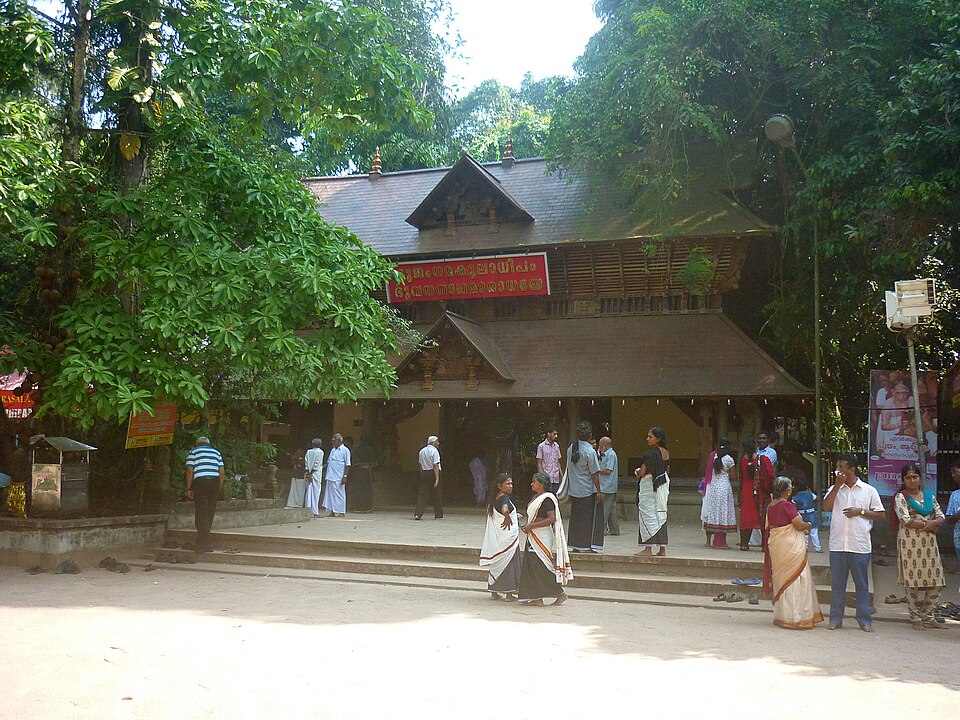
Mannarasala Ayilyam — Serpent Festival
മണ്ണാറശ്ശാല ആയില്യം — നാഗ ദേവതയ്ക്ക് ഭക്തിThere is no other place like Mannarasala in the world. The largest serpent deity (Nagaraja) temple in Kerala occupies a 16-acre sacred forest where thousands of wild snakes live freely among the devotees — moving across paths, resting against idol bases, emerging from the undergrowth during puja. These snakes are not managed, caged or controlled. They are the deity's companions, present by divine will, and in the temple's centuries of documented history, no devotee has been harmed by them.
The monthly Ayilyam nakshatra puja is the most powerful serpent worship day in the Kerala calendar — Ayilyam (Ashlesha in Sanskrit) is the nakshatra ruled by serpent deities. On this day, the Nagaraja temple performs a full abhishekam sequence with fresh turmeric, flowers and milk — substances of coolness and fertility that align with the serpent deity's specific bhavam.
Mannarasala is Kerala's pre-eminent temple for fertility blessings — couples seeking children come from across India. The unusual feature of the temple is its priest: not a Brahmin but the Valiyamma — the senior woman of the founding family — who has managed the temple's daily puja for generations. This matrilineal priestly tradition is unique in Kerala's temple landscape and connects to the ancient Kerala understanding of fertility as a feminine sacred principle.
✦ Visitor Guide
Mannarasala is the supreme example of Kerala's sarpa kavu (serpent grove) tradition — hundreds of such groves exist across Kerala, each protecting an undisturbed forest patch under the deity's protection. Modern ecology has confirmed what tantric tradition understood: these groves are biodiversity sanctuaries of extraordinary richness, sheltering species of medicinal plants, rare birds and endemic insects found nowhere else in their regions. The deity's protection was, for millennia, the most effective conservation law Kerala had.
Vaikom Ashtami Mahotsavam
വൈക്കം അഷ്ടമി — ചരിത്രവും ഭക്തിയും ഒന്നിക്കുന്ന ഉത്സവംThe Vaikom Ashtami Mahotsavam is simultaneously one of Kerala's most important Shiva festivals and one of modern India's most historically resonant sacred sites. The 8-day festival, culminating on the Ashtami (eighth lunar day) of Vrischikam, draws hundreds of thousands of pilgrims to the ancient Mahadeva temple beside the Vembanad backwaters — one of the most serene temple settings in South Kerala.
What makes Vaikom singular is the weight of its living history. In 1924–25, this temple's surrounding roads became the site of the Vaikom Satyagraha — the first major civil rights movement in modern India demanding the right of all communities (including those classified as untouchable) to walk the public roads near the temple. Mahatma Gandhi, Periyar E.V. Ramasamy and Kerala's own social reformers led or supported the movement. The eventual partial success of the Satyagraha — the opening of three of the four roads — laid crucial groundwork for the Temple Entry Proclamation of 1936 and the eventual opening of all Kerala temples to all Hindus. Visiting Vaikom is visiting both a sacred Shiva shrine and the birthplace of India's struggle for religious equality.
During the Ashtami festival, the Vembanad backwater beside the temple becomes the site of the ritual Aarattu (sacred bathing of the deity in the waters) — the Shiva idol is carried in a golden palanquin to the water's edge, accompanied by Panchari Melam and the light of hundreds of torches reflected in the still backwater. It is one of the most visually compelling temple rituals in South Kerala.
The Vaikom Satyagraha's significance extends far beyond its local success. It established the model of nonviolent civil disobedience for religious rights that Gandhi later applied nationally. The temple thus occupies a unique dual status: a living Shiva shrine of great antiquity AND a foundational site of modern Indian democracy. Every pilgrim who enters Vaikom today walks roads that were won for all people through years of patient, courageous nonviolent resistance. That knowledge deepens every step of the darshan.
Ashtami Rohini — Krishna's Birthday in Kerala
അഷ്ടമി രോഹിണി — കൃഷ്ണ ജന്മദിനം, കേരള ഭക്തിയുടെ ആനന്ദ ദർശനംIn Kerala, Janmashtami is called Ashtami Rohini — named for the auspicious confluence of the Ashtami tithi (8th lunar day) and Rohini nakshatra (the birth star of Krishna). This precise astronomical alignment, occurring in the month of Chingam (August), marks Krishna's entry into the world at midnight in Mathura — an event celebrated across Kerala's Vishnu and Krishna temples with an intensity and emotional immediacy that is distinctive to Kerala's devotional culture.
At Guruvayur, the most powerful Krishna temple in South India, the celebrations begin at sunrise with a special Udayasthamana puja and continue through the entire day and night. The Janmashtami Eve sees the temple filled beyond capacity — lakhs of devotees fast through the day and attend the midnight puja marking the exact birth moment, which the pujari announces to the assembled crowd with the ringing of bells and the blowing of the temple conch. The Aarattu procession the next morning — the deity carried in a golden palanquin to the temple tank for a ritual bathing — formally concludes the celebration.
At Ambalapuzha, the Ashtami Rohini celebration has the added dimension of the Palpayasam offered in enormous quantities — the divine chess-game legend directly connects the temple's most famous offering to Krishna's incarnation and his teaching of the exponential nature of divine grace. At smaller village Krishna temples across Kerala, the festival features Krishnanattam performances, Ottanthullal recitations of the Bhagavatam, and the community Vilakku (lamp festival) that illuminates entire temple compounds.
✦ How Kerala Celebrates
Krishna was born at midnight — in a prison, in darkness, during a storm. This is not incidental. The Tantric reading is that the highest divine presence arrives precisely when all external supports have been stripped away — in the darkest hour, in the most confined space, in the middle of chaos. The all-night vigil and the midnight celebration are not ceremonial — they are a devotional enactment of this theology: the willingness to stay awake through the dark, waiting for the divine arrival that comes only when you have exhausted all other options.
Murajapam — 56 Days of Pure Sound
മുരജപം — ശബ്ദ ബ്രഹ്മത്തിന്റെ 56 ദിനംMurajapam is one of the rarest Vedic ritual events in Kerala — held only once every six years, at Padmanabhaswamy Temple. For 56 days, Vedic scholars from across India chant the Vedas continuously in seven sessions (muras) of eight days each, together with the Vishnu Sahasranama japam, directed toward the Ananthashayana deity. The festival is traditionally credited to Anizham Thirunal Marthanda Varma, the founder of modern Travancore. The most recent Murajapam ran from 20 November 2025 to 14 January 2026.
Murajapam is chiefly a ritual of chanting, and it ends with Lakshadeepam — the lighting of about 100,000 lamps across the temple on Makara Sankranti. A ceremonial seeveli procession of the deity is also held during the period. The tradition holds that sustained, correct recitation of the Vedas is itself an offering, renewing the sanctity of the temple and the city.
As always at Padmanabhaswamy, entry to the temple is limited to Hindus. For the 2025–26 Murajapam, temple officials said Veda mandapams would be set up at the four entrances so that devotees could listen to the chanting. Those who have heard the recitation in the stone compound describe it as an unforgettable acoustic experience.
The Naada Brahma (Sound is Brahman) principle underlies Murajapam: in this tradition, careful, sustained recitation is itself the offering. We have not found published research on the physiological effects of Murajapam, so we describe the tradition and the reported experience rather than a measured effect.
Kerala's Great Pooram Tradition — Every District's Finest
ജില്ലതോറും ഒരു മഹോൽസവം — കേരളത്തിന്റെ ഉത്സവ ഭൂപടംPooram — the grand assembly of deities with elephants, percussion and parasols — is the defining festival format of Central Kerala's temple tradition. While Thrissur Pooram is the most famous, every district and sub-region has its own Pooram with distinct character, history and musical tradition. Here is the Pooram pilgrim's guide to Kerala's most significant assemblies.
The twin Mahadeva shrines of Peruvanam (Irattappan — "the twin father") stage one of Kerala's most acoustically overwhelming festivals. The festival is famed for its large ensemble of chenda players performing Panchari Melam. Many connoisseurs rate the Peruvanam melam very highly — the twin-temple format creates a competitive energy that pushes the percussion to extremes impossible at a single procession. The intimate village setting, 15 km from Thrissur city, makes access easy without the million-person crowds of Thrissur.
Called "the poor man's Thrissur Pooram" by some — but Arattupuzha's admirers insist it surpasses Thrissur in one critical dimension: seven deities assemble here (compared to ten at Thrissur, but with more intimate procession dynamics). The Arattupuzha Pooram in Alappuzha district (March–April) follows the Malayalam month of Meenam and is famous for its spectacular Kettukazhcha — enormous illuminated structures built from bamboo and lit by thousands of lamps carried in procession the night before the main Pooram day.
The month-long Vrischika Utsavam at Vadakkumnathan temple, culminating in the Thrissur Pooram itself, begins with a series of smaller elephant processions and special puja sequences that give pilgrims a more intimate experience of the Pooram preparations. The Vadakkumnathan Aarattu procession (ritual bathing of the deity) on the Pooram's final night — after the fireworks have ended and the crowds have thinned — is one of the most atmospherically powerful moments: the deity returning from the great assembly to his private shrine, lamp-lit and serene.
Palakkad's premier festival — the annual Vela (competitive pooram) between Nenmara and Vallanghy village communities at Nellikkuzhi Bhagavati Temple. The festival's unique feature is the Kettukazhcha competition — each village builds enormous illuminated bamboo-and-oil-lamp structures that tower over the temple in the night, competing for the most spectacular presentation. The day-time elephant procession with Panchari Melam and the night-time illumination create a two-phase festival of exceptional diversity. Held in late March–April, it draws visitors from across Palakkad.
The Cochin royal family's premier temple festival at Poornathrayeesa Temple, Thrippunithura — one of Ernakulam district's most culturally rich celebrations. The eight-day festival (November–December) features Kathakali, Koodiyattam (UNESCO heritage, performed in its traditional venue), Harikatha, Ottanthullal and the grand elephant procession on the final night. The festival's art program is considered one of Kerala's finest curated classical performing arts events — staged within the historic temple compound where these arts have been performed continuously for centuries.
The premier temple festival of North Malabar's Bhagavati tradition — the annual Thiruvappana at Thalassery's Jagannath temple combines the North Kerala Thira (possession ritual) tradition with a grand elephant procession in a format unique to the Malabar coast. The festival takes place in February–March and draws devotees from across Kozhikode and Kannur districts. The Thalassery coastal setting — with the temple near the historic Thalassery Fort — gives the festival a historical depth unique among Kerala's Pooram traditions.
The Traditions Behind Kerala Temple Festivals
ഉത്സവങ്ങളുടെ കാലക്രമവും പാരമ്പര്യവുംKerala's temple festivals are not arbitrary celebrations — each follows the Malayalam calendar and the nakshatra (star) system, and each is organised through long-established community roles. Understanding the traditions behind them turns a spectacle into participation.
Many major Kerala festivals are fixed by a specific nakshatra (lunar mansion) in the Malayalam calendar rather than by a fixed solar date, which is why their Gregorian dates shift from year to year. Tradition links particular stars with particular deities and observances — for example Rohini with Krishna's birth star, Ayilyam with serpent worship, and Thiruvathira with Shiva. These associations belong to religious tradition and calendar practice.
Panchari Melam — the percussion ensemble performed at Kerala poorams — is built on a graded rhythmic structure of five stages, beginning at a slow tempo and building through successively faster tempos to a climax. Listeners often describe a movement from calm attention to excitement. We have not found studies establishing specific brain-wave effects for this music, so we describe the structure and the experience rather than a neurological effect.
Many of Kerala's observances fall in distinct seasons, and writers often link them with the Ayurvedic seasonal framework (ritucharya). Karkidakam (July–August), the heavy-monsoon month, is traditionally the month of Ramayana reading and of Ayurvedic rejuvenation treatments. Sabarimala's 41-day vratham — a vegetarian diet and simple living — is observed in the cooler months of Vrischikam and Dhanu. These are traditional associations and interpretive links; we have found no evidence that the festival calendar was designed as a health programme.
Kerala's festivals draw very large crowds who direct their devotion toward a single sacred place at the same moment — most strikingly at Sabarimala during Makaravilakku. In the Tantric understanding, the collective attention and devotion of worshippers is believed to intensify the deity's presence; this is a matter of religious belief. Pilgrims often describe the shared devotion — the chanting, the lamps, the common vows — as the heart of the experience. We make no scientific claim about it.
How to Experience Kerala Temple Festivals — The Pilgrim's Wisdom
ഉത്സവ ദർശനം — ആഴത്തിൽ അനുഭവിക്കാൻAttending a Kerala temple festival is fundamentally different from watching a performance. You are not an audience — you are a participant in a living ritual. This guide helps you engage with these festivals as a knowing devotee, not a bystander.
Learn the legend of the temple and deity before attending its festival. A Thrissur Pooram visitor who knows that this assembly re-enacts the ancient gathering of gods at Vadakkumnathan sees a completely different event from one who sees only elephants and fireworks. A Sabarimala pilgrim who understands the Tantric logic of the 41-day deeksha inhabits the festival from inside, not outside. Preparation is not optional — it is the first ritual of the festival.
On the day before a major festival, observe vegetarian food, gentle speech, and early sleep. The body is a ritual instrument — treating it as one before the festival prepares you to take part in the spirit in which it is observed. Many experienced pilgrims fast on the morning of a festival day, taking only theertham or fruit until after darshan.
Arrive before the event begins, not as it is starting. For Thrissur Pooram, arrive by 2:00 PM for the 5:00 PM Kudamattam — you need time to find a good position. For Makaravilakku, the queue for Sannidhanam entry begins forming 48 hours ahead. For Attukal Pongala, women who arrive before 6:00 AM secure the best positions near the temple. For Theyyam, arrive 90 minutes before the announced time — Theyyam preparations are themselves a sacred visual experience.
The pre-dawn phase of any Kerala temple festival is always the most powerful. The Nirmalyam darshan at major temples on festival days, the first fire at Kottiyur, the midnight puja at Krishnanattam — the pre-dawn window concentrates the festival's sacred energy with none of the crowd pressure of the main event. Many experienced pilgrims attend festivals specifically for the pre-dawn phase and leave before the crowds arrive.
Put down your phone for at least 20 minutes during the festival's peak moment. The sight of the Kudamattam through a phone screen is not the sight of the Kudamattam. The sound of the Makarajyothi announcement heard through earbuds is not that sound. Kerala's festivals are sensory totalities — the smell of the incense and fireworks smoke, the physical vibration of the Chenda drums through the ground, the heat of ten thousand lamps on your skin — these dimensions cannot be captured and are only available to presence.
In the crowd, keep your own calm. Festival crowds carry enormous collective emotional momentum — easy to be swept up in. The experienced pilgrim maintains a gentle internal stillness even within the crowd's excitement, turning the external sensory intensity inward as fuel for deeper devotion rather than outward as entertainment.
Do not rush from the festival to your next activity. Sit quietly after the main event ends — in the temple compound, on the festival grounds, or in your accommodation — and allow the experience to settle. The transition from the intense collective energy of the festival back to ordinary consciousness is itself a sacred passage. Many pilgrims spend the post-festival evening in silence, journaling, or continued mantra recitation.
The prasad and theertham from a festival day carry the accumulated devotional energy of the entire event — consume both with intention. The Aravana from Sabarimala, the Palpayasam from Ambalapuzha on Ashtami Rohini, the Pongala rice from Attukal — these are not food but the physical residue of millions of prayers. Receive them as such.
"Every Kerala festival is a conversation between the cosmos and the community — timed by the stars, animated by the devotees, and renewed by the deity's presence that arrives, blesses, and departs on schedule, year after year, millennium after millennium."— Kerala Temple Guide · keralatempleguide.com