📜 Legends Covered on This Page
Why Temple Legends Matter
ഐതിഹ്യം — ദേവാലയ ആത്മാവ്
When you step inside a Kerala temple, you are stepping into a story that began centuries — sometimes millennia — before you were born. That story is the sthala purana: the sacred origin legend of the temple, passed down through generations of priests, poets, pilgrims and families who hold it not as historical record in the modern sense, but as living, devotional truth.
Understanding these legends changes a pilgrimage. A ritual that might otherwise seem like mechanical repetition becomes a dialogue. The deity who appears as stone becomes, in the eyes of the tradition, a presence with a story, a personality, a reason for being in this exact place. The temple comes alive — and so does your visit.
On this page we have gathered some of the most beloved legends associated with Kerala's most revered temples, told as they are handed down within the devotional tradition — with warmth and cultural depth, while being clear that these are sacred narratives of faith rather than verified historical events.
Guruvayur Sri Krishna Temple
ഗുരുവായൂർ ശ്രീകൃഷ്ണ ക്ഷേത്രം — ഭൂലോക വൈകുണ്ഠം
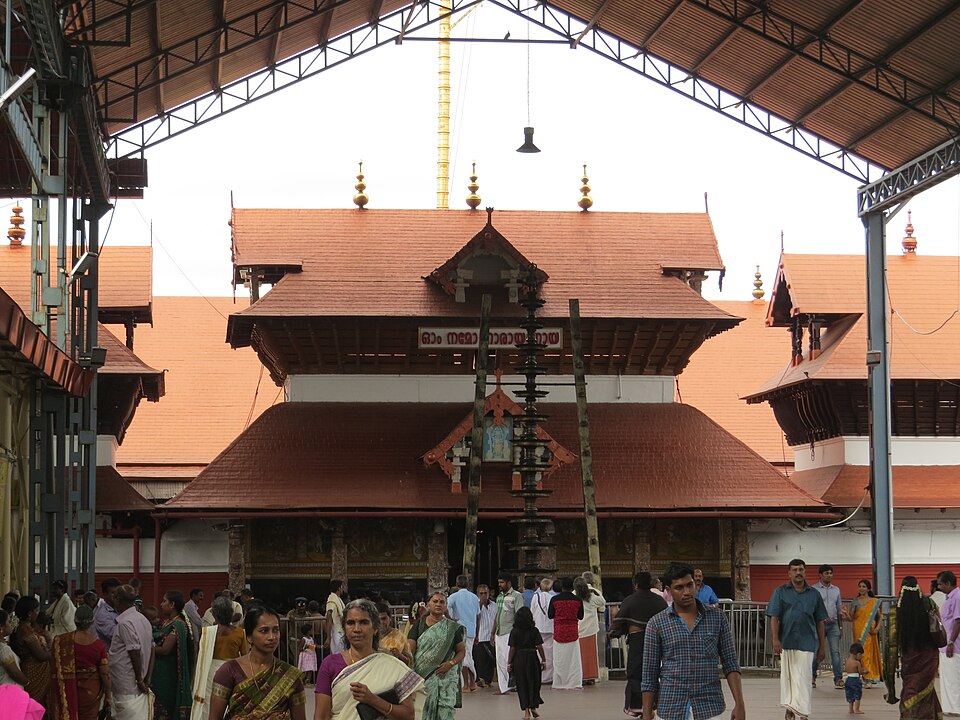
According to the temple's sthala purana, the four-armed form of Vishnu enshrined at Guruvayur — holding conch, discus, mace and lotus — was first worshipped by Brahma the creator at the dawn of creation, before passing through the hands of Sutapa and Prishni, and later Kashyapa and Aditi, the cosmic parents of the gods.
In the Dvapara Yuga, the legend continues, this same murti became the cherished possession of Vasudeva, father of Krishna. Tradition holds that Krishna's earthly leelas — the lifting of Govardhan hill, the defeat of Kamsa, his bond with Radha and the gopis — unfolded under the protective presence of this idol.
When Krishna's earthly life ended and Dwarka began to sink into the sea, it fell to his companion Uddhava to ensure the idol was not lost. Guru (Brihaspati, teacher of the gods) and Vayu (the wind-god) carried it in search of a new home, and — the story goes — a divine sign revealed the exact spot on Kerala's coast where the idol wished to reside. Guru + Vayu = Guruvayur.
The Theological Heart of This Legend
Within the tradition, the idol was not placed at Guruvayur by human choice — it chose its own home, through Guru and Vayu. For devotees, standing before Guruvayurappan means standing before a presence the universe itself is believed to have brought to this land.
The Gajendra Moksha Connection & Temple Elephants
The Guruvayur Ekadasi celebration is closely tied to the legend of Gajendra, the royal elephant seized by a crocodile who, after prolonged struggle, surrendered entirely and called out to Vishnu — whose response is commemorated as swift and unconditional grace. The temple's elephants are regarded by devotees not merely as ceremonial animals but as living reminders of Gajendra and this act of grace.
The 1970 Fire
On November 30, 1970, a major fire damaged much of the temple's wooden structure. The main deity and sanctum idol were undamaged. Devotees who witnessed the fire have long regarded this as an act of divine protection — a story that continues to be retold within the temple's living tradition.
Sabarimala — The Legend of Manikanta
ശബരിമല — മണികണ്ഠൻ, മഹിഷി, ആദ്യ ബ്രഹ്മചാരി
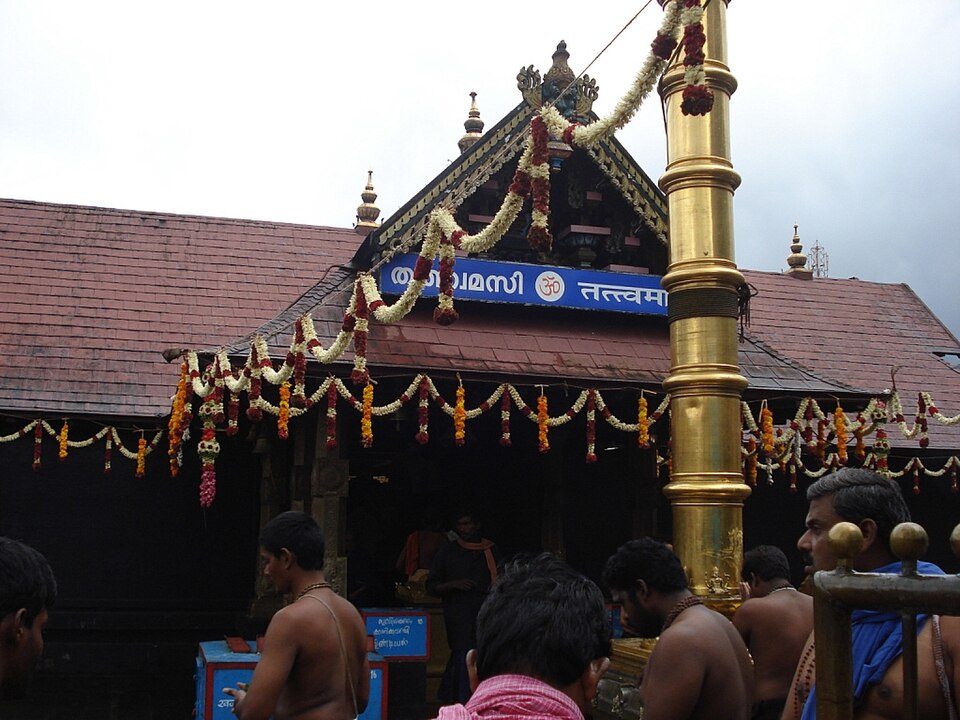
Of Kerala's temple legends, the story of Ayyappa — also known as Sastha, Manikanta and Dharmasastha — is among the most distinctive. In the legend, he is born of Shiva and Mohini (Vishnu's female form), a union that places him, within the tradition's symbolism, at a threshold between Shaiva and Vaishnava, divine and earthly.
The story tells of Mahishi, a demoness granted a boon that she could only be defeated by a child born of Shiva and Vishnu — a union considered impossible. When Vishnu took the form of Mohini and Ayyappa was born of that union, the child was found abandoned in the forest and raised by the childless king of Pandalam as the royal prince, Manikanta, named for the golden bell around his neck.
The Tiger's Milk and the Return to the Forest
According to the legend, a jealous queen feigned illness, claiming only tiger's milk could cure her — a task meant to remove the prince from succession. Manikanta went into the forest alone and returned riding a tiger among a whole pride of them, revealing his divine nature. Having completed his earthly duty, he chose the mountain over the throne, taking his seat in meditation at Sabarimala, where pilgrims travel to seek him to this day.
The 41-Day Deeksha — What It Represents
The 41 days of fasting, celibacy and prayer observed before the Sabarimala trek are understood within the tradition as a disciplined period of physical and mental preparation — a full cycle tied to the lunar month. Many pilgrims describe real, felt changes in focus and resolve by the end of the vratham; this is a matter of personal and devotional experience rather than something that has been scientifically measured, and we present it here as part of the living tradition rather than as an established physiological claim.
Vavar — The Muslim Companion of Ayyappa
A distinctive feature of the Sabarimala tradition is the customary stop at the Erumeli Vavar Mosque along the traditional trekking route. Vavar, in the legend, was a Muslim merchant-seafarer who first encountered Ayyappa in battle and later became his devoted companion. The Vavar shrine at Erumeli and the Vavar Nada at Sabarimala are longstanding parts of the tradition, often described by devotees as a sign that the sacred journey welcomes seekers across faiths.
| Element | Legend Connection | Traditional Meaning |
|---|---|---|
| 18 Sacred Steps (Pathinettam Padi) | Associated with Ayyappa's weapons, the Puranas, and the Sahyadri hills in devotional symbolism | Ascending through layers of worldly attachment toward liberation |
| Irumudi Kettu | Two-compartment bundle of provisions and ghee-filled coconut | The coconut is offered as a symbol of surrendering the self to the deity |
| Black / Blue Dress | Signifies renunciation; Ayyappa as celibate ascetic | Alignment with the deity's naishtika brahmacharya (lifelong celibacy) vow |
| Makaravilakku | A celestial light observed near Ponnambalamedu peak | Regarded by devotees as a moment of cosmic-devotional convergence |
Padmanabhaswamy Temple
പദ്മനാഭസ്വാമി ക്ഷേത്രം — അനന്തശയനവും വില്വമംഗലത്തിന്റെ ദർശനവും
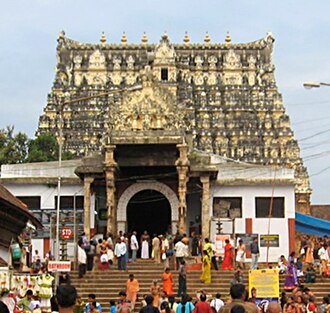
The city of Thiruvananthapuram carries its legend in its own name: Thiru-Ananta-Puram, the sacred city of the divine serpent Anantha. The sthala purana holds that Vishnu, reclining on the serpent Adi Shesha in his Ananthashayana form, first revealed himself here to the saint Vilvamangalam Swamiyar.
In the story, a mischievous boy would follow the saint on his walks, helping and gently teasing him, always vanishing before the saint learned his name. When the saint once scolded the boy, the child smiled and said: "Come to Ananthan's forest — you will find me there."
There, the legend says, a great Iluppa tree fell and transformed into the reclining form of Maha Vishnu, stretching across the forest floor. When the saint prayed for a form his eyes could hold, Vishnu is said to have reduced his form — still spanning the length of three doorways, through which devotees today view the face, the navel-lotus, and the feet in turn.
The Upturned Coconut Shell Offering
Tradition holds that Vilvamangalam Swamiyar's first offering to the divine form was a simple mango pickle in a halved coconut shell. That offering is recreated daily at the temple in a golden coconut shell — a reminder, within the tradition, that even the wealthiest of temples began with the humblest of gifts.
Three Doors, One Deity
Padmanabhaswamy's sanctum is viewed through three separate doorways: the first reveals the face and crown, the second the navel from which Brahma is depicted emerging on a lotus, and the third the feet. Devotees are encouraged to view all three in sequence, a practice understood within the tradition as tracing the cycle of creation, sustenance and liberation.
The Sealed Vault
In 2011, an inventory of the temple's vaults revealed a very large quantity of gold, gems and artefacts, later estimated by some reports at that time to be worth in the tens of thousands of crores of rupees — a figure that has not been independently re-verified since. One vault, referred to as Vault B and sealed with tantric nagabandha markings, was not opened, and remains unopened. Whether approached as a matter of ritual protocol or as an open historical question, it remains one of the temple's most discussed unresolved details.
Kodungallur Sri Kurumba Bhagavati
കൊടുങ്ങല്ലൂർ ഭഗവതി — ഭരണി ഉത്സവവും ചരിത്ര ഓർമ്മകളും
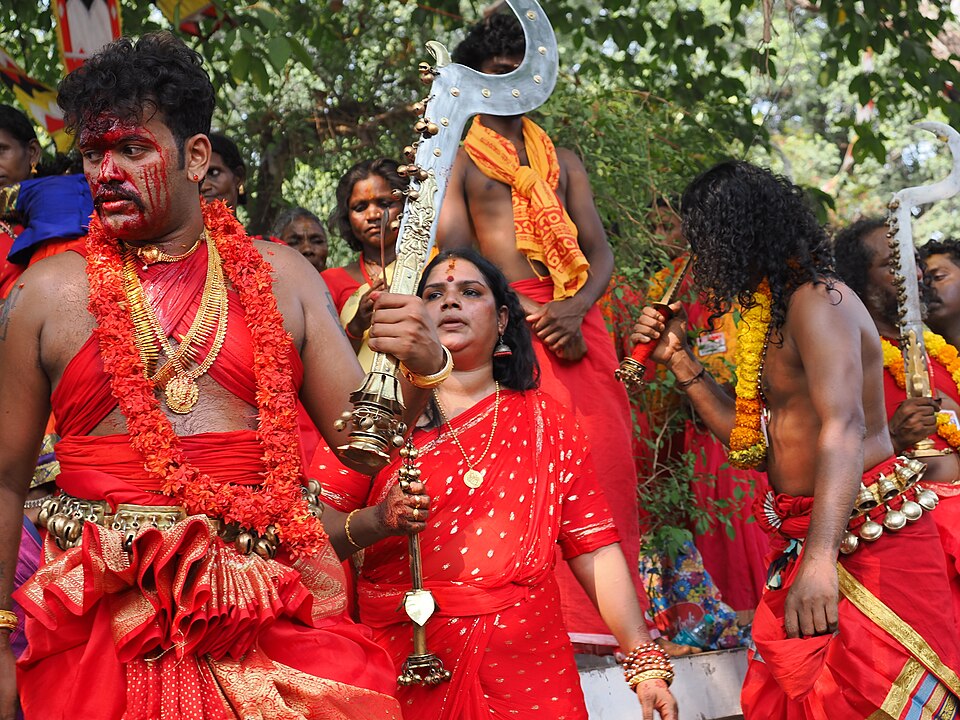
The goddess at Kodungallur is known by many names — Kurumba Bhagavati, Kannaki, Bhadrakali, Bhagavathy — among Kerala's most ancient devotional figures, with roots reaching into coastal and tribal traditions that predate the Brahminic temple system. Her legend layers several strands: she is identified with Kannaki, the heroine of the Tamil epic Cilappatikaram, who is said to have burned Madurai in righteous grief; she is also identified with Bhadrakali, who in the Puranic story defeats the demon Darika.
Kodungallur was historically part of Mahodayapuram, once among the more cosmopolitan ports on this coast, trading with Phoenician, Arab, Jewish, Roman and Chinese merchants over different periods of its long history. The annual Bharani festival, held during the Malayalam month of Meenam (March–April), commemorates the Goddess's mythic victory in a manner that has long drawn attention from visitors and scholars alike.
The Bharani Festival — Radical Devotion
During Meenam Bharani, devotees dressed in red sing bharani paattu — songs using language ordinarily forbidden in temple settings. Komarams (oracles) move through the temple compound in ecstatic ritual states. Within the tradition, these practices are understood as a form of purification in which the Goddess, in her fierce aspect, receives what more conventional ritual settings turn away. The Kavu Theendal (touching of the sacred grove) marks the festival's culmination.
Scholars of Kerala's religious history have also read the Bharani as carrying a memory of resistance — a tradition shaped in part by communities historically excluded from Brahminical ritual, finding sacred expression through the Goddess's fierce, boundary-crossing aspect. Whatever its precise historical origins, the festival remains one of Kerala's largest devotional gatherings, drawing hundreds of thousands of participants each year.
Mannarsala Nagaraja Temple
മണ്ണാറശ്ശാല — നാഗരാജൻ, പരശുരാമൻ, ഒരു ഉടമ്പടി
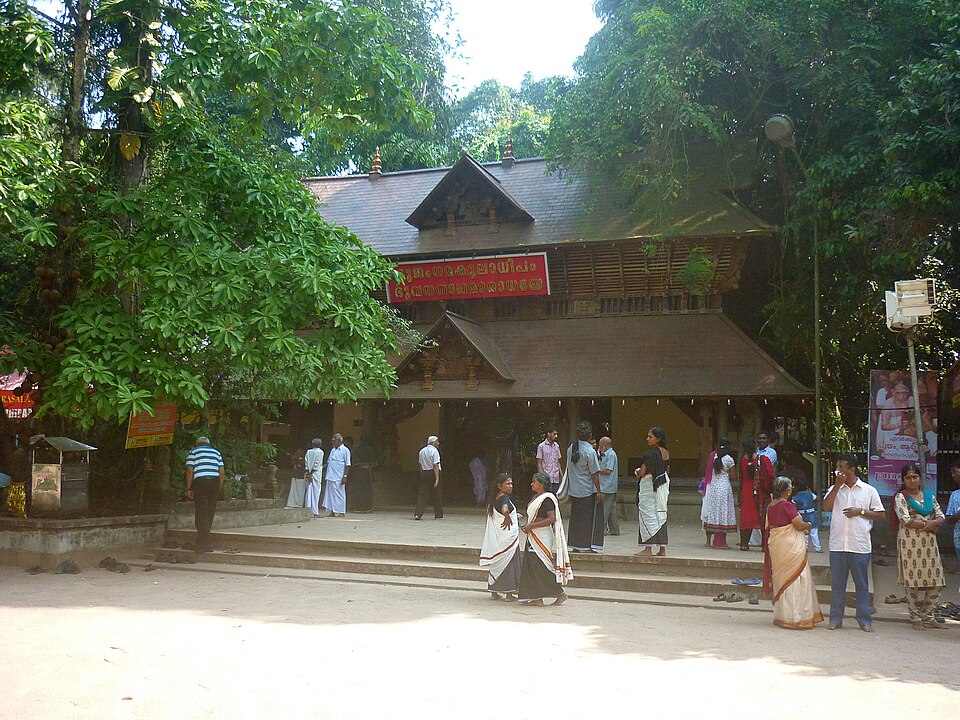
Tradition holds that when Parashurama reclaimed Kerala from the sea — in the legend, by casting his axe from Gokarna to Kanyakumari — the land that emerged was not yet fit for human habitation. Parashurama is said to have made a covenant with the Nagas, the serpent beings believed to dwell in the receding waters: if they consented to share the land and protect it, they would be honoured in sacred groves for all time.
Mannarsala is regarded within the tradition as the place where that covenant is most fully kept. Widely described as Kerala's largest sarpa kavu, the grove holds a very large number of serpent images spread across acres of protected forest, tended for generations by a family of women priests, the Mannarsala Amma. The presiding deity, Nagaraja, is worshipped alongside his consort Nagayakshi and the wider family of serpent deities associated with the grove.
The Woman Priest Tradition
At most Kerala temples, priestly roles are held by men from specific families. Mannarsala is a notable exception: its head priest has traditionally been a woman, a daughter-in-law of the temple family who takes on the role upon marriage into the lineage. She performs the major rituals and observes a demanding standard of personal discipline — a practice the tradition connects to the Naga deity's association with the earth's feminine, generative energy.
The Nooru Pala Offering for Childless Couples
Mannarsala is especially known for the "Nooru Pala" offering, in which couples seeking children offer large quantities of bananas to the serpent deity, traditionally associated with fertility and the generative forces of the earth. Many families are said to return years later with their child for a thanksgiving ceremony.
Ambalapuzha — The Payasam That Can Never Be Repaid
അമ്പലപ്പുഴ പാൽപ്പായസം — ഭഗവാനും രാജാവും ചതുരംഗം
As the story is told, a saintly stranger arrived at the court of the king of Ambalapuzha and challenged him to a game of chess. The king, a confident player, accepted eagerly. The stranger's wager seemed modest at first: one grain of rice on the first square, doubled on every square that followed.
The king had not reckoned with exponential growth. By the time the game ended, the rice owed had grown far beyond anything any kingdom could produce:
2¹ + 2² + 2³ + ... + 2⁶⁴ − 1 = 18,446,744,073,709,551,615 grains of rice — a number well beyond the total rice ever harvested in recorded history.
The stranger then revealed himself as Lord Krishna. Since the debt could never be repaid in full, the story goes, it would instead be honoured through an eternal offering: sweet rice pudding (palpayasam) to be served to devotees at the temple for as long as it stands. Ambalapuzha palpayasam continues to this day, understood by devotees as the living fulfilment of that divine promise.
How Ambalapuzha Palpayasam Is Made
The payasam is traditionally cooked in large clay pots over slow wood fires, using raw (non-parboiled) rice, cow's milk and jaggery, reduced gradually over several hours into a dense, richly flavoured preparation. Many visitors describe it as distinctive among Kerala's temple prasadams — a matter of taste and devotion rather than a claim we can independently verify.
Parassinikadavu Muthappan Temple
പറശ്ശിനിക്കടവ് മുത്തപ്പൻ — മൽസ്യവും കള്ളും ദൈവ പ്രസാദം
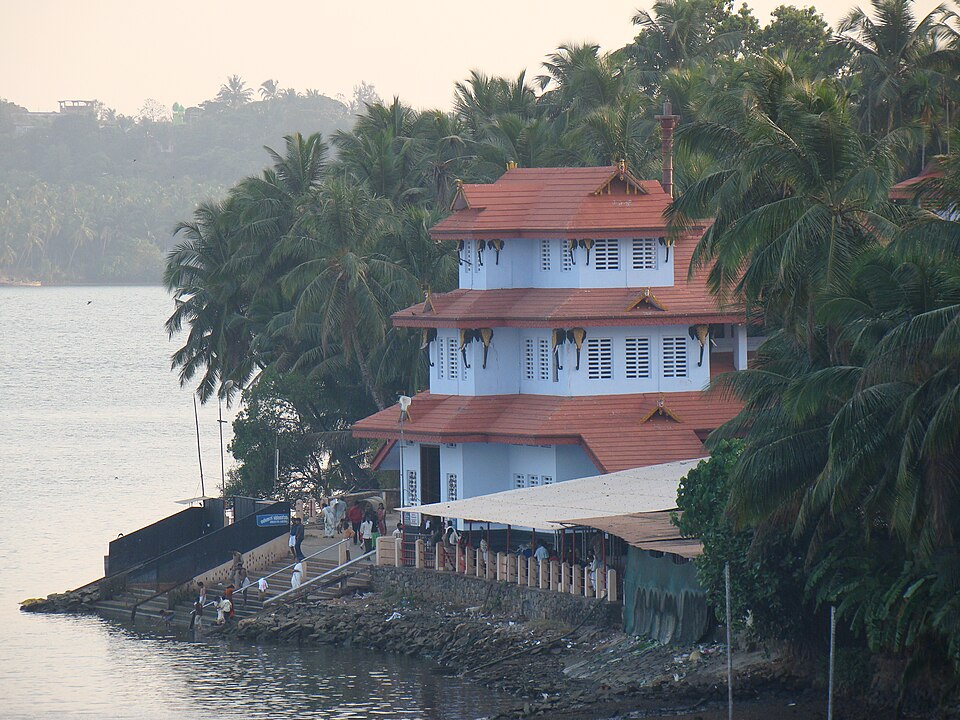
The legend tells of a child born into a Brahmin household in Calicut who declined the sacred thread ceremony and the prescribed Brahminic diet, instead roaming the forests with a bow and a dog, at home among tribal hunters and fisherfolk. His family's efforts to bring him back to convention did not succeed, because — the story holds — the child was Muthappan, a form of the divine that would not be confined to social hierarchy.
Muthappan is said to have eventually walked to the banks of the Valapattanam river and settled at what is today Parassinikadavu, declaring it the place where he would remain — accessible to all, in a form the humblest person could approach.
An Especially Inclusive Tradition
What distinguishes Muthappan worship is its deliberate openness. The prasad offered here includes fried fish and toddy — items excluded from most other temple settings — carrying the message, within the tradition, that what sustains fishing and farming communities is also worthy of sacred offering.
Rituals are led by a member of the Thiyya community rather than a Brahmin priest. The Muthappan theyyam, performed twice daily, is regarded by devotees as a form in which the deity addresses individuals directly. Entry is open to people of all faiths, and non-Hindu visitors are welcomed — an openness devotees describe as central to Muthappan's character.
Chotanikkara Bhagavati Temple
ചോറ്റാനിക്കര ഭഗവതി — ഉഷഃകാലത്തെ ദർശനം, രോഗ ശമനം
Chotanikkara holds a distinct place in Kerala's sacred geography. According to legend, a forest fire once swept through the area and stopped abruptly at a particular spot; at its centre, on the untouched ground, was a swayambhu — a self-manifested — image of the Goddess, said to require no human craftsman.
Devotees describe the Goddess at Chotanikkara as taking three forms across the day: Saraswati in the morning (in white, holding a veena), Lakshmi at noon (in red), and Durga or Bhadrakali in the evening (in deep blue). Witnessing all three darshans in a single day is considered especially auspicious within the tradition.
The Temple's Association with Healing
Chotanikkara is widely known across Kerala for devotees who come seeking comfort from anxiety, grief and psychological distress, particularly during the Karkidaka Vavu period and the nightly Valia Guruthi ritual. Many describe finding real peace and relief through this practice, and the role of ritual, community and shared faith in easing distress is well recognised. At the same time, conditions like anxiety, depression and other mental health difficulties are medical matters, and devotional practice here is best understood as a source of comfort and support alongside — not a replacement for — qualified medical or psychiatric care. Anyone experiencing ongoing psychological distress is encouraged to also seek help from a doctor or mental health professional.
The Goddess at Chotanikkara does not ask you to be well before you come. She asks you to come. — Devotional tradition of Chotanikkara
The Aitihyamala — Kerala's Garland of Legends
ഐതിഹ്യമാല — കൊട്ടാരത്തിൽ ശങ്കുണ്ണി
For readers drawn to Kerala's temple legends, the natural next step is the Aitihyamala — "Garland of Legends" — written by the scholar Kottarathil Shankunni, first published beginning in 1909 and eventually spanning eight volumes and well over a hundred stories. It remains one of the most significant written collections of Kerala's oral tradition.
Its pages hold stories of mantravaadis (sorcerers) and yakshis (forest spirits), of scholars and kings, temple elephants, and Brahmin scholars whose wisdom is restored through devotion. The Aitihyamala gathered stories that had long circulated in households and temple corridors but had rarely been recorded together in one place — including accounts, such as the well-known Paraya Petha Panthirukulam legend, that preserve perspectives on caste and social memory not typically found in Brahminical texts.
Oral Tradition and the Living Temple Legend
Kerala's temple legends circulated by word of mouth for generations before being written down. Every legend on this page began, in some form, as a grandmother's story, a priest's aside, or a festival storyteller's performance — and that oral origin is part of what still gives these stories their warmth.
Continue Exploring
More from Kerala Temple Guide
Rituals & Customs
The meaning behind Kerala temple rituals — pradakshina, abhishekam, deeparadhana explained.
Read More →Temple Offerings
Every vazhipadu has a story. Understand what your offering means and how to give it with devotion.
Read More →Temple Arts
Theyyam, Mudiyettu, Koodiyattam, Krishnanattam — Kerala's ritual arts that bring legends to life.
Read More →Famous Temples
Detailed guides to Kerala's most revered temples — history, architecture, darshan timings and travel tips.
Read More →Beliefs & Faith
The tantric, Ayurvedic and spiritual dimensions of Kerala's temple beliefs — explained with respect.
Read More →Pilgrimage Tourism
A practical guide for pilgrims — routes, timing, accommodation, and what to expect.
Read More →