⚡ Kottiyur Vaishakha Mahotsavam — At a Glance
Location
Kottiyur, Kannur District, Kerala
Duration
27 days (Vaisakha–Jyaistha, Saka calendar)
When (approx.)
Roughly May–June each year (exact dates vary)
Deity
Sree Mahadeva (Shiva) — Swayambhu Lingam
Unique Feature
No permanent temple — worship under open sky at Akkare shrine
Sacred River
Bavali River — crossed barefoot by pilgrims
Main Offering
Odappoov — wild forest flowers
Nearest City
Kannur (75 km), Thalassery (60 km)
A Festival That Predates Temple Architecture ക്ഷേത്ര നിർമ്മാണത്തിന് മുൻപ് ആരംഭിച്ച ആരാധന
Kerala has over 1,200 significant temples. Most have towering gopurams, elaborate mandapas, ornate woodwork and ritual spaces precisely calibrated by Thachu Shastra — the ancient science of sacred architecture. Kottiyur has none of these. And that absence is not a deficiency. It is the point.
Kottiyur's Akkare (the far-bank) shrine is one of the only major pilgrimage sites in India where the worship space has deliberately never been enclosed. The Vaishakha Mahotsavam has been conducted for so long that no living tradition can name a beginning. The oral lineages of the priests (tantris and nambiars who have served this shrine for centuries) speak only of "always" — the festival has always happened, the river has always been crossed, the wild flowers have always been the offering.
This article is the most complete guide to Kottiyur Vaishakha Mahotsavam available — covering the legend, the geography, the two shrines (Ikkare and Akkare), the rituals, the sacred ecology, the pilgrimage protocol and everything a visitor needs to make this extraordinary journey with full understanding.
The Sacred Geography — Forest, River and Two Shrines ഭൂമിശാസ്ത്രം — കാട്, നദി, രണ്ട് ക്ഷേത്രങ്ങൾ
Kottiyur sits at the edge of the Wayanad forest in northern Kerala — a region where the Western Ghats descend steeply, the air is perpetually moist, and the Bavali river runs cold even in the height of summer. The landscape itself feels sacred before you see a single shrine.
Ikkare Kottiyur — This Bank
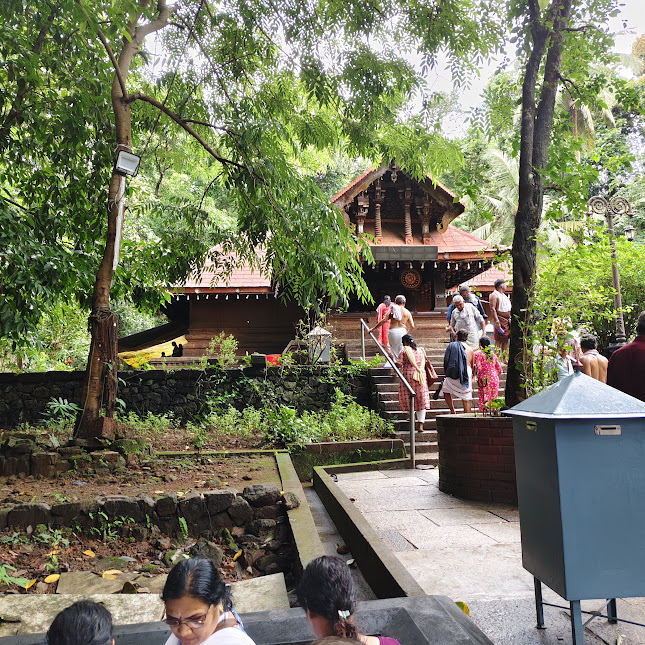
Ikkare literally means "this bank" in Malayalam. The Ikkare Kottiyur temple is the permanent shrine complex on the accessible side of the Bavali river. It is open year-round and functions as the administrative and ritual base of the entire Kottiyur tradition. The shrine here has a proper temple structure — though deliberately modest compared to Kerala's major temples — and receives pilgrims throughout the year.
Ikkare is where the preparation happens. Priests perform the preliminary rituals here. Pilgrims register, change into traditional attire and mentally transition from the world of roads and towns into the world of sacred forest. This transition is itself understood as a ritual act.
Akkare Kottiyur — The Other Bank
Akkare means "the other bank." This is where the main Vaishakha Mahotsavam rituals take place — and it is only accessible during the 27-day festival period, when the Bavali river is shallow enough to cross on foot. The rest of the year, the far bank is inaccessible and the sacred grove remains in complete, undisturbed quiet.
The Akkare shrine has no permanent roof. No walls. The swayambhu Shiva lingam (self-manifested, not carved by human hands) stands in the open forest, sheltered only during the festival by a temporary structure of bamboo and forest materials that is erected anew each year. After the 27 days end, everything is dismantled. The shrine returns to the forest.
"The deity does not need walls to be present. Shiva was here before the first stone was cut, and he will be here long after the last gopuram crumbles. The open sky is not absence of shelter — it is the most honest recognition that the divine needs no shelter at all."
— Traditional understanding of the Akkare shrineThe Sacred Legend of Kottiyur — How This Forest Became Holy Ground ഐതിഹ്യം — ഈ വനഭൂമി ദേവഭൂമിയായ കഥ
Every Kerala temple carries a sthala purana — a sacred origin story. Kottiyur's is among the most powerful and most climatically appropriate in all of Kerala's tradition. It begins not with a king's dream or a saint's vision, but with one of the most dramatic events in all of Hindu mythology: the destruction of Daksha's yajna.
Daksha, the king of the gods and Sati's father, performed a great yajna (sacred fire ceremony) to which he deliberately did not invite Shiva. Sati, consumed by grief and shame at the insult to her husband, immolated herself in the yajna fire. Shiva, overcome by grief and rage, took the body of Sati and wandered across the cosmos — an act that destabilised the entire universe. Vishnu, to restore balance, sent his Sudarshana Chakra (divine discus) to dismember Sati's body as Shiva carried it. Sati's body fell in 108 pieces across the Indian subcontinent — each piece consecrating the land where it fell, creating the 108 shakti peethas of Hindu tradition.
At Kottiyur, Sati's hair fell. And where the divine hair touched the earth, Shiva himself chose to remain — manifesting as a swayambhu lingam in the deep forest, accompanied by Parvati (in her form as Sugandhi or Sree Devi). The forest that witnessed the descent of Sati's sacred hair became permanently consecrated ground. The Bavali river that runs past it carries the sanctity of that moment in every molecule of its water.
The Daksha Yajna Connection and the Festival's Timing
The timing of the festival — during the Malayalam month of Vaisakha, which corresponds to the period of the Pleiades star cluster's prominence — is also significant. The Vaisakha month in Kerala's astronomical calendar is considered the period when cosmic shakti (divine energy) is at its annual peak. Worshipping Shiva during this window, at a site already charged by Sati's sacred descent, creates a convergence that the tradition regards as uniquely powerful.
The Rituals of Vaishakha Mahotsavam — 27 Days of Living Worship ആചാരങ്ങൾ — 27 ദിവസം, ജീവനുള്ള ആരാധന
The 27-day festival is not a single event — it is a sequence of precisely orchestrated rituals, each with its own significance, its own timing and its own set of priests responsible for its execution. The overall arc moves from preparation and purification through intensification toward a sacred climax and careful closure.
The Bavali River Crossing — Pilgrimage's First Act
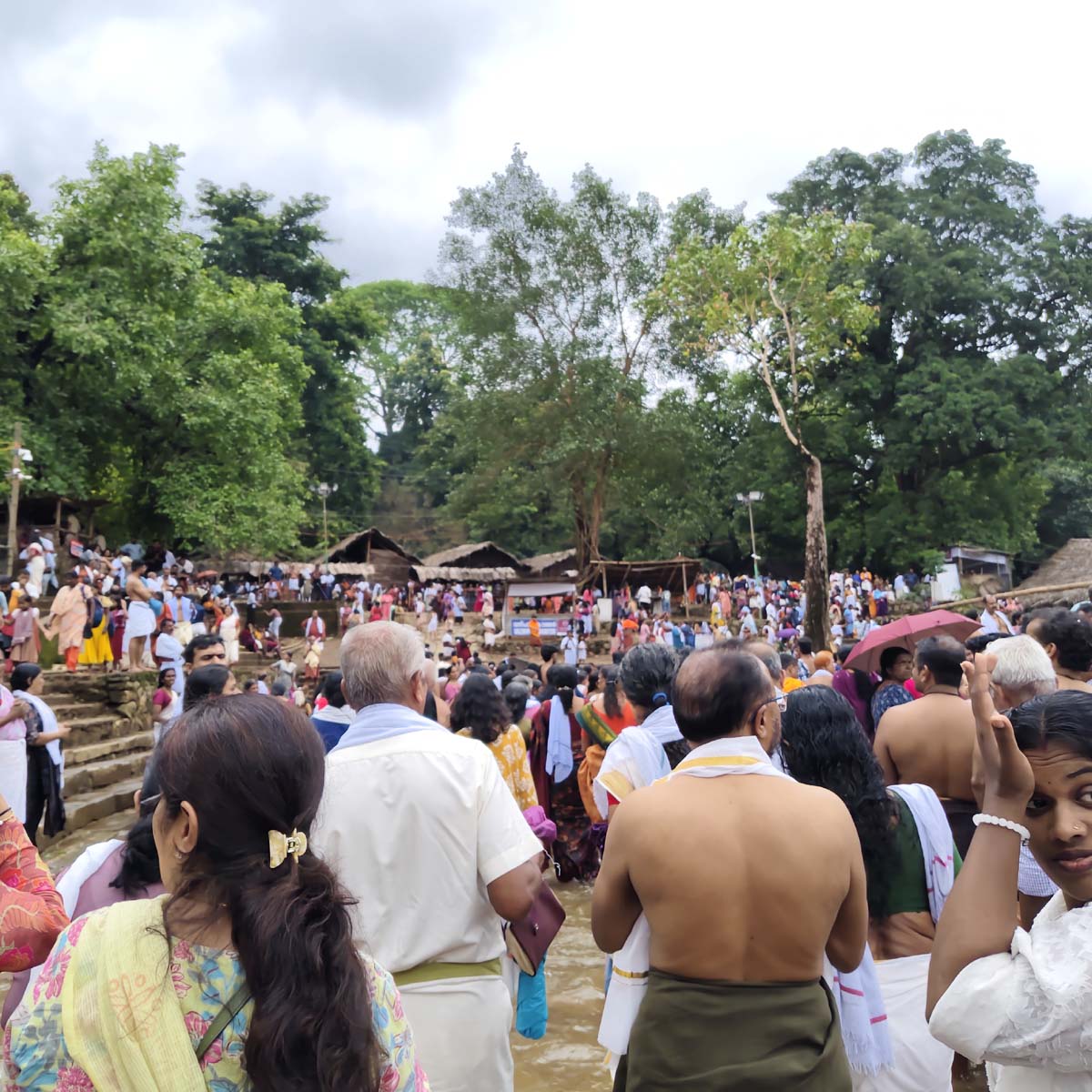
Every pilgrim's Kottiyur experience begins with the same act: removing their footwear on the Ikkare bank and wading across the Bavali river to reach Akkare. The river, in Kerala's sacred geography, is a tirtha — a crossing point between the mundane and the sacred. Wading through it is not just practical transport; it is ritual purification.
The river water during Vaishakha is itself prasad — pilgrims cup their hands and drink from it as they cross. The water, having flowed through the Wayanad forest and past the sacred grove, carries the energetic charge of the shrines it passes. The act of drinking it is the pilgrim's first act of receiving the divine grace of Kottiyur.
Odappoov — The Most Sacred Offering
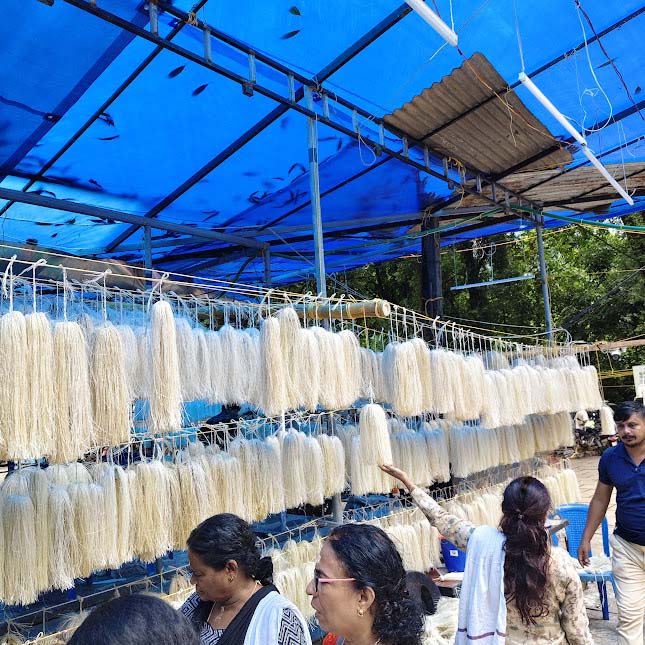
If one element defines the Kottiyur tradition above all others, it is odappoov — wild flowers gathered fresh from the surrounding Wayanad forest. These are not cultivated flowers. They are not purchased from vendors. They cannot be ordered in advance or substituted with garden flowers. They must be freshly gathered from the specific wild species that grow in the forest around the shrine — usually including specific varieties of forest orchids, wild jasmine species and other endemic woodland flowers.
The theological reasoning behind this offering is profound: Shiva at Kottiyur is worshipped in his most primal form — the deity of the wild, the lord of the Himalayas and forests, the ascetic who needs no cultivated offering, only what the forest itself provides. Odappoov is the forest's own gift to its own lord. The gathering of these flowers is itself a ritual act — pilgrims who collect them from the forest are performing a form of sacred service even before they reach the shrine.
Receiving the odappoov as prasad from the Kottiyur priest — a small handful of these forest flowers, still carrying the scent of the wild — is considered one of the most auspicious blessings in all of Kerala's temple tradition.
The Key Ritual Days
- Opening Day (Kodiyettam): The festival flag is raised at Ikkare with full tantric ritual. The Akkare shrine is formally opened and the Bavali crossing made available to pilgrims for the first time in the year.
- Thiruvanandal: The most sacred ritual of the entire festival — a complex puja sequence performed only by the senior tantri in the dead of night. Access to the Akkare shrine is restricted during this period.
- Ashtami Rohini: The Krishna-Shiva convergence day, when the lunar calendar aligns Rohini nakshatra with the ashtami tithi. Considered the most auspicious single day for darshan during the entire 27 days.
- Vaisakha Ekadasi: The 11th lunar day — when Vishnu's grace is at its peak. The union of Shaiva and Vaishnava energies at this moment is theologically unique and draws the largest single-day crowds of the festival.
- Closing Day (Kodiyirakkal): The festival flag is lowered with equal solemnity. The Akkare shrine is formally closed. The temporary structures are dismantled and the forest reclaims its quiet.
Ikkare and Akkare — Two Shrines, One Sacred Whole ഇക്കരയും അക്കരയും — ഒരേ ദൈവം, രണ്ടു ഭാവം
| Feature | Ikkare Kottiyur (This Bank) | Akkare Kottiyur (The Other Bank) |
|---|---|---|
| Meaning | "This bank" — the accessible side | "The other bank" — the sacred far side |
| Open When | Year-round | Only during the 27-day Vaishakha Mahotsavam |
| Structure | Permanent traditional temple building | No permanent structure — open sky worship |
| Access | Via road; footwear allowed up to boundary | Cross the Bavali river barefoot |
| Primary Ritual | Daily pujas, administration, pilgrim support | Main Mahotsavam rituals, Thiruvanandal, Kodiyettam |
| Main Offering | Standard Kerala temple offerings | Odappoov (wild forest flowers) — mandatory |
| Deity Energy | Shiva in accessible, benevolent form | Shiva in primal, forest-ascetic form |
| After Festival | Continues all year | Dismantled; forest sealed until next Vaisakha |
The Sacred Ecology of Kottiyur — A Forest Protected by Faith പ്രകൃതി ഭക്തി — വിശ്വാസം സംരക്ഷിക്കുന്ന കാട്
The Kottiyur tradition is one of the most remarkable examples of what ecologists call "sacred natural sites" — landscapes preserved from human exploitation not by law but by religious belief. The forest surrounding the Akkare shrine has never been cut, farmed, settled or commercially used. For centuries, the local communities around Kottiyur have understood that this forest belongs to Mahadeva — and that disturbing it invites divine displeasure.
The practical ecological result is extraordinary. The forest surrounding the Akkare shrine is old-growth Wayanad forest — one of the most biodiverse ecosystems in peninsular India. Giant Bombax trees that predate any living memory. Wild orchid species not found anywhere else in Kannur district. Medicinal herbs of the Ayurvedic pharmacopoeia growing as they have for millennia. Streams that run year-round because the forest that feeds them has never been disturbed.
The Bavali river itself owes its perpetual clarity to this protected forest. Because the catchment area has never been deforested, the river runs pure even in drought years. The pilgrims who drink from it are tasting water that has filtered through centuries of undisturbed root systems. The ecological and the sacred are not separate here — they are the same thing, expressed in two different vocabularies.
Kerala's Forest Festivals and Biodiversity
A 2019 ecological survey of sacred forest sites in Kannur found that areas around traditional festival grounds like Kottiyur had significantly higher plant diversity than adjacent managed forests. The tradition of restricting access to the Akkare grove for most of the year functions as a perfectly calibrated wildlife recovery system — 27 days of human activity followed by 338 days of complete forest silence.
Complete Pilgrimage Guide — How to Visit Kottiyur Vaishakha Mahotsavam തീർത്ഥാടകനുള്ള പ്രായോഗിക ഗൈഡ്
How to Get There
- By road from Kannur: Approximately 75 km via Thalassery and Mananthavady road. Journey time approximately 2.5 hours. Regular KSRTC buses from Kannur KSRTC stand; extra buses during festival season.
- By road from Thalassery: Approximately 60 km. Private taxis and autos available from Thalassery railway station.
- By road from Iritty: Approximately 30 km — Iritty is the nearest town. Auto-rickshaws available from Iritty.
- Nearest railway station: Kannur (75 km). Thalassery (60 km).
- Nearest airport: Kannur International Airport (approximately 80 km).
- During festival season: Special KSRTC services from Kannur and Thalassery operate directly to Kottiyur. Check KSRTC Kerala website for the festival season schedule.
What to Wear — Dress Code
- Men: Dhoti or mundu (white or off-white) — worn without upper garment for the river crossing and Akkare darshan. Shirt may be worn at Ikkare. No trousers or shorts permitted.
- Women: Saree or salwar kameez covering shoulders and knees. Modest, traditional dress is expected and required.
- Footwear: Remove footwear on the Ikkare bank before crossing the river. No footwear is permitted at any point in the Akkare area.
- Jewellery: Minimal. The tradition emphasises simplicity and purification over adornment.
Dietary Observance — Before and During the Visit
Kottiyur maintains one of the strictest food purity traditions of any Kerala pilgrimage. The forest surrounding the shrine is a zone of heightened spiritual energy — and the quality of what a pilgrim has eaten in the days before their visit is understood to affect their capacity to receive that energy.
- At minimum: Avoid non-vegetarian food for 3 days before visiting.
- Ideally: Observe a full sattvic diet (vegetarian, no onion or garlic) for the week before visiting.
- On the day itself: Light meal or fasting before the river crossing. Heavy meals make the physical crossing more difficult and are spiritually contrary to the tradition.
- At the site: No non-vegetarian food is permitted anywhere in the festival zone. This is enforced by the festival authorities.
Best Time to Visit During the 27-Day Festival
Every day of the festival is sacred, but certain days are particularly auspicious and particularly crowded:
- For the best experience with manageable crowds: Visit in the first or last week of the festival. Mid-festival weekends can see extremely large crowds.
- For the most auspicious darshan: Ashtami Rohini and Vaisakha Ekadasi. Be prepared for very long waits — arrive before dawn.
- For a meditative, quiet experience: Weekday mornings in the opening week, when crowds are smaller and the forest atmosphere is most palpable.
- Avoid: Festival weekends between 9 AM and 2 PM, when crowds are heaviest and heat makes the river crossing and forest walk strenuous.
Why Kottiyur Is Unlike Any Other Festival in India ഭാരതത്തിൽ മറ്റൊരിടത്തും ഇല്ലാത്ത ഉത്സവം
Kottiyur Vaishakha Mahotsavam sits in a category of its own. India has many forest shrines — but most are visited year-round. India has many seasonal festivals — but most take place in permanent temples. Kottiyur combines seasonal restriction, open-sky worship, mandatory river crossing, wild-gathered offerings and a pre-modern sacred ecology into a living tradition that has no precise parallel anywhere on the subcontinent.
- No permanent roof: The Akkare shrine has never had one. This is not poverty or neglect — it is deliberate theology. Shiva in his primal aspect needs no human architecture.
- Wild flower offering: Odappoov cannot be cultivated, purchased or substituted. It must come from the forest. This forces every pilgrim into an ecological relationship with the sacred site.
- River crossing as ritual: The Bavali crossing is not a logistical challenge — it is the first and most essential ritual act of the pilgrimage. You cannot receive Kottiyur's blessing without getting your feet wet.
- Seasonal opening: The 338 days of forest silence between festivals is as sacred as the 27 days of worship. The closing of the shrine is not an end — it is part of the same devotional act as the opening.
- Ecological preservation as devotion: The forest has never been cut because Mahadeva lives there. The biodiversity has been protected for centuries through the mechanism of belief — making this one of the world's longest-running conservation projects.
The Human Story — Who Comes to Kottiyur and Why ഭക്തരുടെ കഥ — ആരാണ് ഇവിടെ വരുന്നത്, എന്തിന്?
The pilgrims who come to Kottiyur during Vaishakha are not a homogeneous crowd. They include elderly men and women from Kannur's fishing communities who have made this journey every year for fifty years without exception. Young couples seeking blessing for a new marriage or a hoped-for child. Students from Bangalore who heard of Kottiyur from their grandparents and finally made the journey. Farmers from Wayanad who bring offerings of forest honey. Academics and cultural historians who come to observe. Children experiencing their first pilgrimage, carried across the Bavali river on their fathers' shoulders.
What unites them is not denominational uniformity — Kottiyur draws devotees from across Kerala's caste and community spectrum. It is something harder to define: a shared recognition that this forest is genuinely different from any other place, that the air here carries something that is not present elsewhere, that standing before the Akkare lingam under the open sky produces an experience that no enclosed sanctum — however beautiful, however elaborately ritualised — quite replicates.
Many pilgrims describe the moment of stepping out of the Bavali river onto the Akkare bank as the most powerful moment of the entire pilgrimage — the moment when the transition is complete, when the world of daily life has been left behind on the other bank, and the sacred forest receives them. That moment — wet feet, cool forest air, the sound of the river fading behind, the distant sound of temple bells ahead — is why people return to Kottiyur year after year.
"I have been to Guruvayur, to Sabarimala, to Padmanabhaswamy. Each is extraordinary in its own way. But only at Kottiyur have I stood in a place where I felt, with complete certainty, that the forest itself was the temple and the sky itself was the dome — and that no human architect could have done better."
— A devotee from Thalassery, on his twelfth visit to KottiyurFrequently Asked Questions — Kottiyur Vaishakha Mahotsavam സ്ഥിരം ചോദ്യങ്ങൾ — ഉത്തരങ്ങൾ
📖 Read more in-depth articles on Kerala's sacred temples and festivals.
← Back to All Blogs