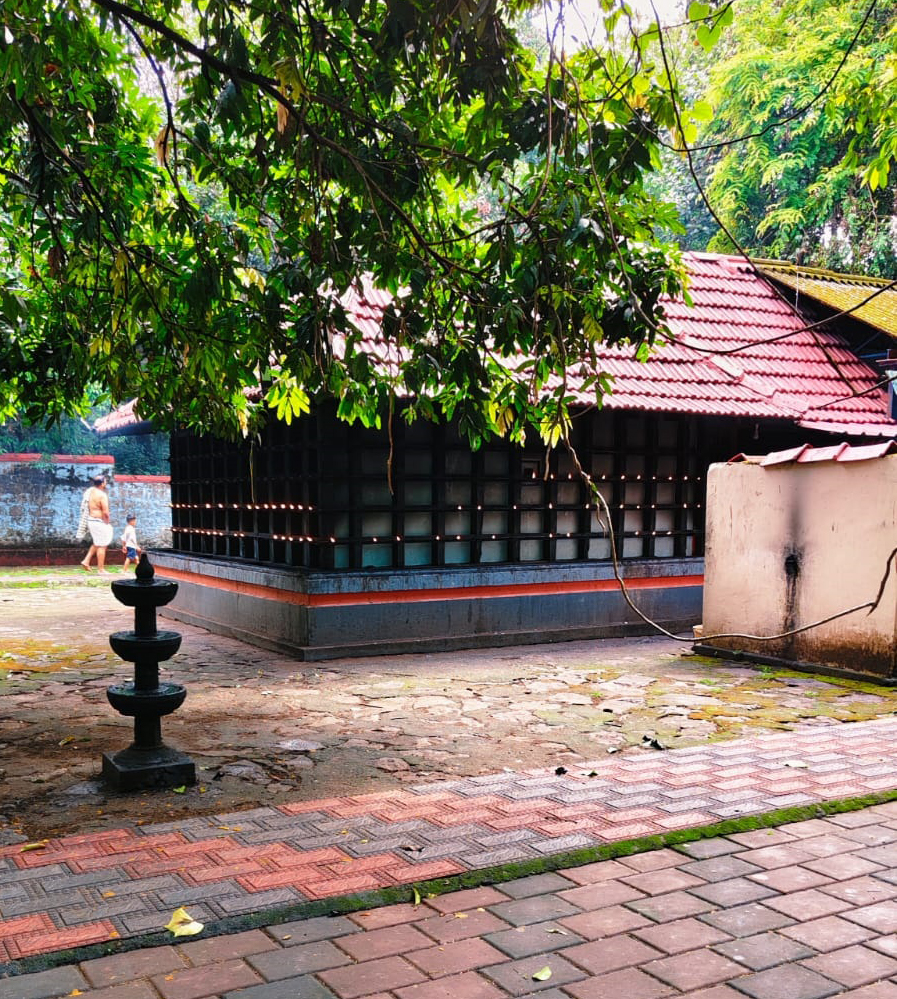
Why Chandanakkavu Is Not Like Any Ordinary Temple ഒരു ക്ഷേത്രം, നാലു ദേവഭൂമികൾ
The name itself tells a story. Chandana means sandalwood. Kavu is the Malayalam word for a sacred grove — a forest space consecrated to a deity, protected by faith for generations. Chandanakkavu is, literally, the grove of sandalwood — and the trees that give this place its name still stand here, tall and fragrant, in what remains of a forest that was once twice as large.
But what makes Chandanakkavu extraordinary is not its trees, however ancient. It is what happened beneath them. According to local tradition, for more than four centuries this quiet grove was one of the most active centres of Vedic learning in Kerala — a place where Brahmin scholars gathered to study the Vedas, Mimamsa, Tantra, Sanskrit grammar and the shastras under teachers of the highest calibre. The great 16th-century poet-saint Melpathur Narayana Bhattathiri, whose Narayaneeyam is still recited daily at Guruvayur Temple, was born in Melpathur village in Kurumbathur, close by, and — according to local tradition — received his early Vedic education within these very groves.
Chandanakkavu is not one temple. It is a sacred complex of four separate temples, each with its own presiding deity, its own architectural identity and its own ritual calendar — yet functioning as an integrated sacred whole. Together, these four temples house eighteen deities, making Chandanakkavu one of the most deity-rich sacred complexes in Malappuram district.
"The place resonant with the voices of Matrudatta's disciples engaged in learning the shastras." — Vasudevan Namboodiri in his poetic work Bhramarasandesham, describing Chandanakkavu as a centre of Vedic scholarship more than four centuries ago.
— Bhramarasandesham, paraphrasedA Temple Complex with a 400-Year History of Vedic Learning നാനൂറ് വർഷം പഴക്കമുള്ള വൈദിക ജ്ഞാനകേന്ദ്രം
It is one thing to say a temple is ancient. It is another to understand what that antiquity actually meant for the people who lived near it. At Chandanakkavu, the history is not merely architectural — it is intellectual and devotional, in equal measure.
Matrudattan Namboodiri, an authority on the Veda, Mimamsa, Tantra and other shastras, established Chandanakkavu as a centre of learning in the 16th century. He settled here, married into the Payyur Illam family (itself a renowned scholarly household), and built what was effectively a residential Vedic university in the grove. Children from the nearby Brahmin households — the Illams that dotted the Malappuram and Tirur regions — would come to Chandanakkavu for their formal Vedic education. The Ganapati temple at the heart of the complex was where Vedadhyayana (the study and recitation of the Vedas) took place.
Matrudattan's second son was Melpathur Narayana Bhattathiri — born in 1560, in the Melpathur village at Kurumbathur, within walking distance of the Chandanakkavu grove. He grew up hearing the recitation of the Vedas in this very temple. He would have performed his first prayers at this Ganapati shrine, received his tilak at Melekkavu, and made pradakshina around these four shrines before he was old enough to understand why.
The Narayaneeyam Connection — Chandanakkavu and the Greatest Devotional Poem in Sanskrit നാരായണീയം — ഗ്രന്ഥകർത്താവായ മേൽപ്പത്തൂരിന്റെ നാടുമായുള്ള ബന്ധം
Narayaneeyam is a devotional Sanskrit masterpiece — 1,036 verses in praise of Guruvayurappan (Vishnu as Krishna), composed at Guruvayur Temple. It is still recited daily by priests at Guruvayur. It is read by devotees across the world. It is one of the most celebrated works of bhakti literature in the Hindu tradition. And it has a direct, living connection to Chandanakkavu.
Melpathur Narayana Bhattathiri was a child prodigy — a master of Vedic recitation, Sanskrit grammar, Mimamsa philosophy and Tarka shastra (the science of debate) by the age of sixteen. He is counted among the important members of the Kerala school of astronomy and mathematics. His scholarly work Prakriya-sarvasvam set forth a comprehensive system of Sanskrit grammar.
But the story that defines him — and connects him to Chandanakkavu — is one of devotion, self-sacrifice and miraculous healing. Bhattathiri's guru, Achyuta Pisharati, was afflicted with a severe illness. In an act of extreme devotional solidarity, Bhattathiri took on his guru's illness — transferring it to himself through an act of sympathetic identification rooted in the Vedic concept of guru-bhakti. He spent years suffering from severe rheumatism as a result.
Before he made his journey to Guruvayur to seek healing through devotion to Guruvayurappan, Bhattathiri came to Chandanakkavu. He performed a final pooja at the temple where he had grown up. According to temple tradition, he consecrated the Bhagavathy idol — formalising his personal deity's presence for the devotees who would come after him. He left his family temple, walked to the holy shores of Guruvayur, and composed Narayaneeyam over 100 days — each dasakam (set of ten verses) describing a different story of Krishna's divine life. By the time the final verse was composed, his illness was gone. The deity had kept his word.
According to local tradition, the Ganesha worshipped in the Ganapati temple at Chandanakkavu was Melpathur Bhattathiri's personal upasana murti — the deity he prayed to every day from childhood, the one whose blessing he sought before beginning every act of learning or composition. When you bow before this Ganesha today, you are bowing before the same divine form that was worshipped by the man who created Narayaneeyam.
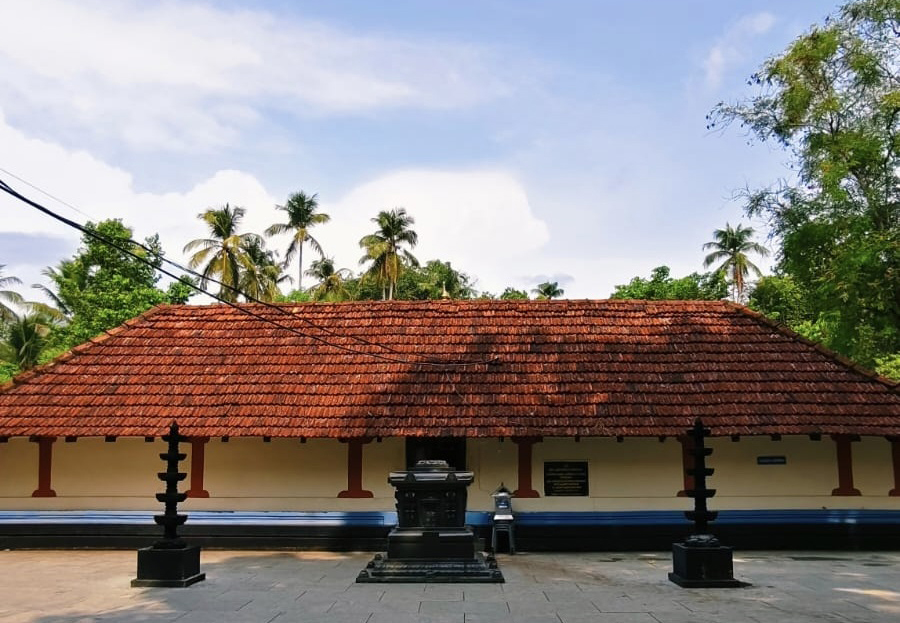
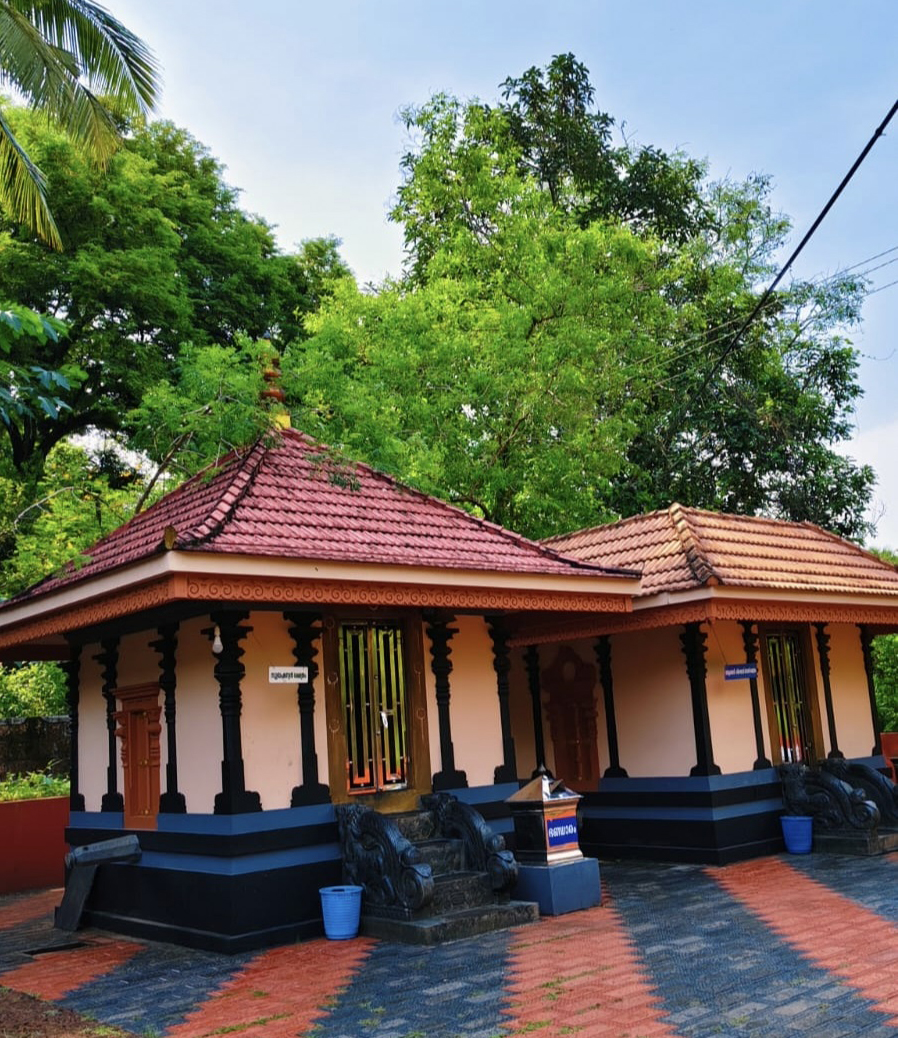
The Four Temples of Chandanakkavu — A Complete Guide ചന്ദനക്കാവിലെ നാലു ക്ഷേത്രങ്ങൾ
Understanding Chandanakkavu requires understanding its four temples not as separate institutions but as four expressions of a single sacred vision. Each has its own identity, its own resident deities, and its own special significance — but all four draw from the same sacred ground and the same ancient tradition.
Melekkavu — The Temple of the Upper Grove
മേലേ കാവ് — ശിവൻ, ഭഗവതി, ഒരേ പീഠം
Melekkavu is the presiding temple of the Chandanakkavu complex — the one with greatest prominence and oldest spiritual authority. The name means "the upper grove," reflecting its position within the landscape of the sacred site.
What makes this temple architecturally and theologically extraordinary is its main installation: Shiva and Bhagavathy are installed together on the same peedam (sacred platform) — a rare and profound expression of Ardhanareeshwara theology, the recognition that masculine and feminine divine energies are not separate but complementary aspects of the one absolute. To worship here is to worship wholeness.
The sub-deities of Melekkavu include Kara Bhagavathy — a form of the goddess associated with protection from harm — and, most significantly, Eettilath Amma (ഈറ്റില്ലത്തമ്മ), the divine mother whose special grace is sought by pregnant women. Eettilath Amma is associated with safe delivery and the protection of mother and newborn — her specific offering is a black silk cloth, a tradition unique in Kerala's temple landscape.
Kalamezhuthum Pattu, the major annual festival of the entire Chandanakkavu complex, takes place in the Melekkavu shrine premises on Uthram nakshatra in the month of Meenam.
Keezhe Kavu — The Temple of the Lower Grove
കീഴേ കാവ് — ഭഗവതി, വള്ളിക്കാവിൽ അമ്മ, സുബ്രഹ്മണ്യൻ
Keezhe Kavu ("the lower grove") is dedicated primarily to Goddess Bhagavathy, alongside the sub-deities Vallikavil Amma and Subrahmanian (Murugan/Karthikeya). The additional sub-deities here are Sastha (Ayyappa) and Vettakkorumakan (the divine hunter — an aspect of Shiva as forest ascetic).
The presence of Vettakkorumakan in Keezhe Kavu is particularly significant — this deity is closely associated with the Kalamezhuthum Pattu tradition in Kerala, and his worship here adds an important layer to understanding the ritual calendar of the temple.
The energy of Keezhe Kavu is fierce and protective — the Bhagavathy here is understood in her warrior aspect, the goddess who destroys obstacles and protects her devotees from unseen forces. Many devotees visit specifically for resolution of long-standing difficulties in life, career and family.
Ganapati Temple — The Sacred Centre of Vedic Learning
ഗണപതി ക്ഷേത്രം — നാരായണ ഭട്ടതിരിയുടെ ഉപാസനാ മൂർത്തി
The Ganapati Temple is the theological and historical heart of Chandanakkavu. This is where Vedic learning took place for generations — where Melpathur Narayana Bhattathiri received his early education, where Matrudattan Namboodiri taught the shastras to students from across Malappuram and beyond.
The temple houses Ganesha along with Brahma, Vishnu, Shiva and Goddess Saraswati — a remarkable pentad of deities that reflects the complete cosmology of Hindu thought. Creation (Brahma), sustenance (Vishnu), dissolution (Shiva), knowledge (Saraswati) and the remover of obstacles who makes all things possible (Ganesha) — together they represent every force a serious student of the sacred sciences would need to propitiate.
There is something unusually touching about Ganesha's orientation here: he faces west, unlike the vast majority of temple deities who face east. This westward orientation has specific tantric significance — it is associated with the sunset energy, the completion of cycles, and the receiving of knowledge from those who have gone before. For a temple that was literally a school, this makes a kind of profound sense.
The Ganesha here is specifically identified as Melpathur Bhattathiri's upasana murti — his personal deity of daily worship. This is not a historical footnote. It means that when you pray here, you are praying to the same Ganesha that one of Kerala's greatest scholars invoked at the beginning of every act of learning and composition.
Vishnu Kshetram — The Circular Sanctum
വിഷ്ണു ക്ഷേത്രം — വട്ട ശ്രീകോവിൽ, കിഴക്ക് ദർശനം
The Vishnu temple at Chandanakkavu is architecturally distinctive: Vishnu Bhagavan is worshipped in a vatta sreekovil — a circular sanctum. The circular sanctum is one of the rarest temple architectural forms in Kerala; it is associated with specific Tantric spatial science and the understanding that the divine, in its sustainer aspect, has no corners — no edges — only the complete, unbroken circle of grace.
The deity faces east — toward the rising sun, toward the direction of new beginnings and the light of knowledge — and is worshipped in the traditional Vaishnava ritual tradition.
The Vishnu Kshetram completes the theological quadrant of Chandanakkavu: Shiva and Shakti in Melekkavu, Shakti's warrior energy in Keezhe Kavu, the remover of obstacles and the full array of cosmic knowledge in the Ganapati temple, and the sustainer of all creation in Vishnu Kshetram. Together these four temples form a complete sacred map of the Hindu cosmos.
Eighteen Deities — The Complete Sacred Roster of Chandanakkavu പതിനെട്ട് ദേവതകൾ — ഒരു ക്ഷേത്ര പ്രപഞ്ചം
The number 18 carries deep significance in Hindu tradition — 18 Puranas, 18 chapters of the Bhagavad Gita, 18 armies at Kurukshetra, 18 steps at Sabarimala. At Chandanakkavu, all 18 deities are installed across the four temple shrines. This is not coincidence — it reflects a deliberately designed sacred ecosystem in which the full spectrum of divine energies is present and accessible.
| Temple / Shrine | Primary Deities | Sub-Deities |
|---|---|---|
| Melekkavu (Upper Grove) | Shiva and Bhagavathy (on same peedam) | Kara Bhagavathy, Eettilath Amma (ഈറ്റില്ലത്തമ്മ) |
| Keezhe Kavu (Lower Grove) | Bhagavathy, Vallikavil Amma, Subrahmanian | Sastha (Ayyappa), Vettakkorumakan |
| Ganapati Temple | Ganesha (Melpathur's upasana murti) | Brahma, Vishnu, Shiva, Saraswati Devi |
| Vishnu Kshetram | Vishnu Bhagavan (circular sanctum, east-facing) | Associated Vaishnava sub-deities |
The Sacred Wall Painting — A Living Masterpiece
One of Chandanakkavu's most distinctive features is its thidambu chithram — the sacred wall painting that is itself an object of veneration. Unlike most Kerala temples where the mural is decorative, at Chandanakkavu the wall painting of the presiding deity carries its own divine energy and receives its own ritual worship. Devotees who have seen it describe an unusual quality of presence in the image — as if the eyes in the painting are genuinely alive. This is one of very few Kerala temples where a painted image — not a stone idol — holds such prominent sacred authority.
Eettilath Amma — The Divine Mother of Safe Delivery ഈറ്റില്ലത്തമ്മ — പ്രസവ രക്ഷ, ഒരു കറുത്ത പട്ടുകോടി
Among all the unique features of Chandanakkavu, the tradition surrounding Eettilath Amma may be the most touching. The name itself tells the story: Eettilath refers to the birth chamber — the room where a woman gives birth — and Amma is mother. She is, literally, the mother of the birthing room.
Eettilath Amma is worshipped specifically by pregnant women, and by families awaiting the birth of a child. The specific offering — a black silk cloth — is unlike the offering made to any other deity at this temple or, to most visitors' knowledge, at any other temple in Kerala. The black silk is associated with the night, with the womb, with the darkness from which all life emerges into light. It is at once a prayer for safe passage through the most vulnerable threshold a woman ever crosses, and an acknowledgement that this threshold is itself divine.
Many families who have welcomed children safely into the world return to Eettilath Amma to give thanks — a second black silk cloth offered in gratitude, and the first darshan for the newborn child. This cycle of prayer and thanksgiving has continued here for hundreds of years, and it continues today.
In an era when maternal healthcare was entirely dependent on community wisdom and divine protection, Eettilath Amma represented something deeply practical as well as sacred. The women who worshipped here were not being superstitious — they were drawing on the deepest resources available to them in a world where childbirth carried genuine risk, and where the presence of a protective divine mother was understood as one of the most important safeguards available. That tradition continues to be honoured, even as modern medicine has transformed the landscape of childbirth.
Kalamezhuthum Pattu — Drawing Divinity on the Temple Floor കളമെഴുത്തും പാട്ടും — ദൈവം ഭൂമിയിൽ ഇറങ്ങി വരുമ്പോൾ
The most important festival ritual at Chandanakkavu is Kalamezhuthum Pattu, held on Uthram nakshatra in the Malayalam month of Meenam (March–April). It is one of Kerala's most ancient and visually spectacular ritual art forms — and at Chandanakkavu, where the Bhagavathy and her consorts are the presiding energies, it takes on a particular intensity and beauty.
Kalam means picture. Ezhuthu means drawing or writing. Pattu means song. The name tells you everything: Kalamezhuthum Pattu is the making of a sacred picture with singing. But that description does not come close to capturing what actually happens.
How Kalamezhuthum Pattu Works
Hereditary artists from communities such as the Kuruppu, Theeyadi Nambiar and Theeyadi Unni arrive at the temple well before dawn. They prepare the floor of the mandapam (ritual hall) — cleansing it with cow dung and water, drawing the initial boundary markers in rice powder. Then, using five colours made entirely from natural materials — white (rice flour), black (charcoal powder), yellow (turmeric), green (powdered leaves) and red-orange (turmeric mixed with lime) — they create an intricate drawing of the deity on the temple floor.
This is not casual drawing. The proportions, the posture, the ornaments, the weapons, the expression — every element is prescribed by tradition and carries specific theological meaning. The head of the deity is always drawn last, as a mark of reverence — you approach the divine incrementally, from the feet upward. The completed kalam can take several hours to create and may span many square metres of floor space.
Once the kalam is complete, the ritual singing begins. The songs — in old Malayalam, a mixture of ancient Tamil and Malayalam — first invoke the deity into the image. They narrate the deity's origin, her battles, her powers, her grace. The percussion builds. The fragrance of incense fills the air. Devotees crowd the edges of the mandapam, watching as the painted deity on the floor seems to breathe.
The climax of the ritual is the dissolution of the kalam. The songs shift — they are now songs of pacification, of sending the deity back with gratitude. The performing artists, sometimes in a trance-like state, ritually erase the drawing. The goddess has been invoked, has been present, has been honoured, and now departs — carrying the prayers and sorrows and hopes of those who came with her.
Philosophically, Kalamezhuthum Pattu embodies one of Hinduism's deepest teachings: Srishti (creation), Sthiti (sustenance) and Samhara (dissolution) are not three separate acts — they are one continuous sacred process. The making and unmaking of the kalam is a complete cosmological statement performed in art.
When to Visit for Kalamezhuthum Pattu
Kalamezhuthum Pattu at Chandanakkavu takes place on Uthram nakshatra in the Malayalam month of Meenam — typically in March or early April. The exact date changes annually based on the Kerala astronomical calendar. Arrive the evening before for the preparation rituals and stay through the dawn of the festival day for the full experience. The kalam creation is best witnessed in the pre-dawn hours; the singing typically begins before sunrise. Photography protocol should be confirmed with temple authorities on arrival.
Temple Timings and Daily Puja Schedule ദർശന സമയം — ദിനേന ചൈതന്യം
🕐 Chandanakkavu Temple — Daily Puja and Darshan Timings
| Puja / Event | Time | Significance |
|---|---|---|
| Nada Thurakkal (Opening) | 5:00 AM | The formal opening of the sanctum — the first light falling on the deity after the night's accumulated puja energy. The most peaceful and charged moment of the morning session. |
| Nirmalyam | 5:05 AM | Viewing and clearing the night's offerings — the accumulated devotional energy of the previous evening and night. Sacred and rare to witness at most temples. |
| Usha Pooja (Dawn Puja) | 7:00 AM | The full morning puja — abhishekam, flower decoration and food offering. The temple is fully active and the deities are in their morning appearance. |
| Ucha Pooja (Noon Puja) | 10:00 AM | The midday offering — the final puja of the morning session before the afternoon break. |
| Temple Closes | 11:00 AM | Afternoon break until 5:00 PM. Plan to arrive by 9:30 AM for the morning session. |
| Temple Reopens | 5:00 PM | Evening session begins. The quality of light at this hour in a forest grove is extraordinary. |
| Deeparadhana (Lamp Worship) | 6:30 PM | The lamp-lighting ceremony — one of the most visually beautiful moments at any Kerala temple. In the grove setting of Chandanakkavu, the lamps reflect in the surrounding trees. |
| Athazha Pooja (Night Puja) | 7:00 PM | The evening food offering to the deities. |
| Temple Closes | 7:30 PM | The sanctum is closed for the night. |
The Festival Calendar — Sacred Days at Chandanakkavu ഉത്സവ കലണ്ടർ — പ്രധാന ദിവസങ്ങൾ
Chandanakkavu observes a full cycle of sacred days drawn from both the solar and lunar Kerala calendar. Each festival is not simply a celebration — it is a ritual occasion when the deity's energy is understood to be at its most accessible and most potent.
- Kalamezhuthum Pattu: The major annual festival — Uthram nakshatra in Meenam (March–April). The ritual drawing of the deity on the temple floor, accompanied by sacred songs and percussion. The most important event in the Chandanakkavu calendar.
- Prathishtadinam in Meenam: The anniversary of the temple consecration (prathishta) — a deeply auspicious day that celebrates the moment the deity took up permanent residence in this grove.
- Atham in Edavam: Celebrated in May–June. Atham nakshatra in the month of Edavam is considered especially auspicious for Bhagavathy worship.
- Thiruvonam: The great Onam nakshatra day — auspicious across all Kerala temples and particularly significant here for Vishnu worship at the Vishnu Kshetram.
- Chithira in Medom: Celebrated in April. The Chithira nakshatra in Medom is the birth star of Vishnu according to some traditions — a major puja day at the Vishnu Kshetram.
- Ashtami Rohini: Krishna Janmashtami — the birthday of Krishna. At a temple with deep Bhattathiri connections and Narayaneeyam heritage, this day carries exceptional significance.
- Navarathri: The nine-night festival of the goddess — especially important at Melekkavu and Keezhe Kavu where Bhagavathy is the presiding deity. Saraswati Puja on the ninth day is particularly relevant given the temple's deep scholarly heritage.
Why Chandanakkavu Matters to Malappuram's Sacred Heritage മലപ്പുറം ജില്ലയിലെ ക്ഷേത്ര ഭൂപടത്തിൽ ചന്ദനക്കാവ്
Malappuram district is often described in terms of its Muslim majority and the cultural landscape of that community. But it is also a land of extraordinary Hindu sacred heritage — the Thirunavaya Navamukunda Temple on the banks of the Bharathapuzha, the Thirumandhamkunnu Bhagavathy Temple, the Kadampuzha Devi Temple, the Kottakkal temples. Chandanakkavu sits in the middle of this sacred geography, connected by proximity to Tirunavaya and the Bharathapuzha river tradition, and by history to the greatest devotional poet Malappuram ever produced.
What Chandanakkavu offers, that few other temples in Kerala can, is a specific kind of historical continuity — the sense that the connection between a great creative mind and the deity he worshipped was enacted here, in this grove, in these shrines. The ruins of Melpathur's family home stand near the temple even today. The sandalwood trees that give the place its name are still here. The Ganesha that Bhattathiri prayed to every morning of his scholarly life is still here.
There is a word in Sanskrit — samskara — that means the imprint left on a place or a person by great spiritual action. Chandanakkavu has that imprint. It is quiet, it is not famous, it receives no tourist buses. But for the pilgrim who comes knowing what they are looking at — knowing that they are walking on the same ground where the author of Narayaneeyam took his first steps in Vedic learning — the grove carries a quality of presence that is entirely its own.
How to Reach Chandanakkavu Temple ചന്ദനക്കാവ് ക്ഷേത്രത്തിൽ എത്തിച്ചേരാൻ
Address
Chandanakavu Temple, Thirunavaya - Kalpakacherry Road, Kurumbathur, Kerala 676301. Contact: +91 96332 21517.
By Train
The nearest railway station is Tirunnavaya (2.7 km), on the Shoranur–Mangalore coastal line. The Tirunnavaya station is a small station — check that your train stops there. Alternatively, Tirur railway station (approximately 5 km) has better connectivity. From either station, auto-rickshaws and taxis readily reach the temple.
By Road
- From Tirur: Approximately 5–6 km via Kurumbathur road. Regular autos available.
- From Malappuram town: Approximately 28 km via Tirur. KSRTC buses to Tirur and then local transport.
- From Kozhikode (Calicut): Approximately 55 km via NH 66 to Tirur. About 1.5 hours by road.
- From Thrissur: Approximately 60 km via Shoranur–Tirur route.
- Via Tirunavaya: If you are visiting the famous Tirunavaya Navamukunda Temple — a highly recommended pairing — Chandanakkavu is just 2 km further along the same road.
By Air
Nearest airport: Calicut International Airport (CCJ), approximately 45 km (1.5 hours by road). Cabs are readily available from the airport.
📌 Pilgrimage Planning Tip
Chandanakkavu and Tirunavaya Navamukunda Temple are only 2 km apart. Plan a combined visit — Tirunavaya in the morning (it is one of the 108 Divya Desams of Vishnu) and Chandanakkavu in the same session. Both temples reward an early morning visit when the crowds are minimal and the light through the trees is extraordinary.
Frequently Asked Questions — Chandanakkavu Temple ഉത്തരം ഇല്ലാത്ത ചോദ്യങ്ങൾ ഇല്ല
📖 Explore more in-depth articles on Kerala's sacred temples.
Back to All Blogs →