Why Guruvayur Is Unlike Any Other Templeഗുരുവായൂർ — ഒരു ഭൂലോക വൈകുണ്ഠം
There are more famous temples in India. Larger ones, wealthier ones, more architecturally elaborate ones. But there is no temple quite like Guruvayur — because no other temple holds quite this idol, in quite this form, with quite this unbroken tradition of daily worship stretching back to a time before Kerala as we know it existed.
The deity here is not Vishnu the cosmic sustainer or Vishnu the warrior-king. He is Guruvayurappan — Vishnu as a child, a four-armed child holding the conch, discus, mace and lotus, radiating the particular energy of vatsalya bhakti: the love a parent feels for a child, turned inside out so that the devotee feels it for the divine. Millions of Malayalis have grown up calling this deity their own — not a distant cosmic power, but a child who belongs to them, whose welfare they feel personally responsible for.
That intimate, familial quality of devotion is what makes the atmosphere at Guruvayur different from any other sacred site. The people you stand in queue alongside are not strangers performing a religious duty. They are a family visiting a beloved child — and the warmth of that understanding fills every inch of the temple compound.
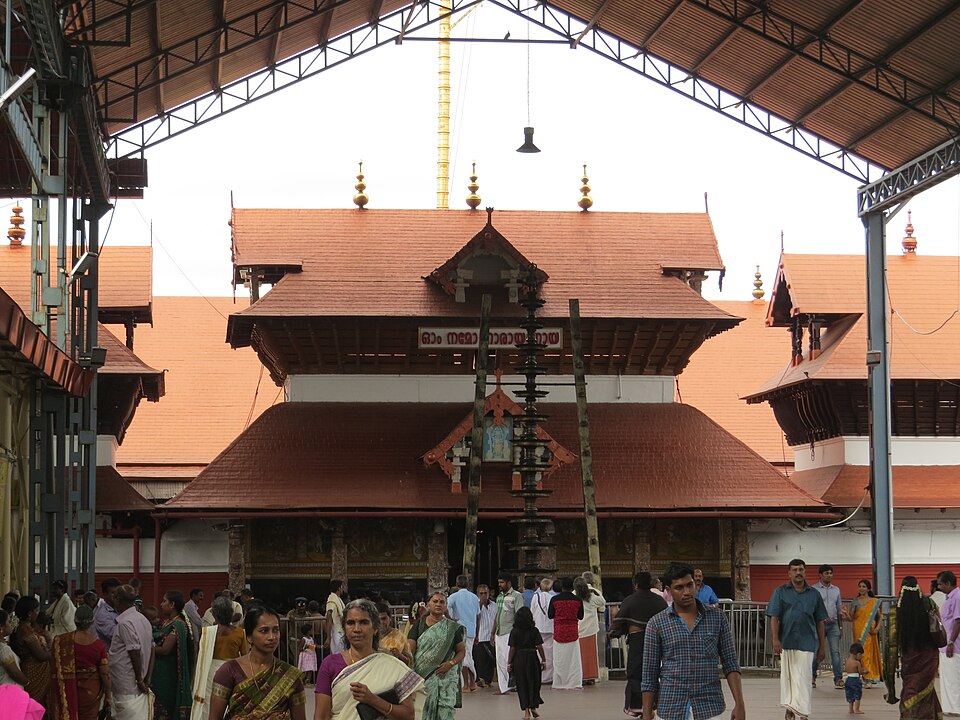
The Sacred Legend — How Guruvayurappan Came to Keralaഗുരുവായൂർ ഐതിഹ്യം — ദ്വാരകയിൽ നിന്ന് ഗുരുവും വായുവും
The sthala purana of Guruvayur begins at the dawn of creation. The idol now enshrined here was first worshipped by Brahma himself — receiving it directly from Vishnu. From Brahma, it passed through a lineage of divine and royal custodians: Sutapa and Prishni, Kashyapa and Aditi, then to Vasudeva — the father of Krishna himself.
Throughout Krishna's earthly life — the years in Gokula, the defeat of Kamsa, the Mahabharata war, the great leelas that form the substance of the Bhagavata Purana — this idol was present. It was the same idol before which Yashodha prayed for her child Krishna's safety. This is not a representation of Vishnu. It is a witness to all of divinity's earthly chapter.
When Dwarka began to sink into the sea after Krishna's departure, his companion Uddhava was anguished. Krishna instructed him: seek Brihaspati (Guru) and Vayu (the wind-god). Together they will carry the idol to a land prepared for it. Guru and Vayu descended to Kerala, searched the Malabar coast and found the perfect spot — a lake called Rudratirtha, where a Shiva lingam already consecrated by Parashurama himself stood. On those banks, they installed the idol — and the deity named himself after those who brought him: Guru + Vayu = Guruvayur.
"The idol did not need to be placed at Guruvayur by human decision. It chose this land. That choice — made by the universe through Guru and Vayu — is the first miracle of Guruvayur, and it changes everything about how you stand before Guruvayurappan."
— On the meaning of the Guruvayur sthala puranaComplete Darshan Timings and Puja Scheduleദർശന സമയം — ഓരോ പൂജയും അറിയുക
Guruvayur follows the Udayasthamana Puja system — an unbroken sequence of eight worship sessions running from before dawn to after dusk. This ritual exists only at Guruvayur. Being present for even one of these transitions — especially the Nirmalyam at 3 AM or the lamp-lit Deeparadhana in the evening — is an experience that stays with you for a lifetime.
🕐 Daily Puja and Darshan Schedule — Guruvayur Temple
| Puja / Event | Time (approx.) | What to Expect |
|---|---|---|
| Temple Opens / Nirmalyam | 3:00 AM | Viewing the previous night's accumulated offerings before clearing. Deepest devotional atmosphere of the day. Very few crowds. The inner sanctum glows with lamp-light and incense from the night's unbroken worship. |
| Thiruvanandal (Abhishekam) | 3:30 AM | Sacred bathing of the deity with milk, curd, honey, banana, coconut water and other Ayurvedic substances. The sanctum fills with the fragrance of fresh flowers and camphor smoke. |
| Malar Nivedyam | 6:30 AM | First full food offering of the day — rice, curries and payasam. The smell of cooking prasad from the temple kitchen fills the outer corridors. |
| Pantheeradi Puja | 8:30 AM | The deity appears in full regalia — flowers, ornaments and elaborate decoration. The most visually spectacular morning puja. Crowds are growing by this time. |
| Uchabali (Noon Puja) | 12:00 PM – 1:00 PM | Midday offerings before the afternoon closure. The temple closes at 1 PM for the afternoon break. |
| Evening Reopens | 4:30 PM | Evening darshan begins. The warm amber light inside the sanctum at this hour is particularly beautiful. |
| Deeparadhana (Lamp Worship) | 6:45 PM – 7:15 PM | The most visually magnificent puja of the day. Dozens of lamps waved before the deity in rhythmic sequence to percussion and bells. One of the most moving ritual moments in all of Kerala. |
| Athazham (Night Puja) | 8:30 PM | The evening meal offering — final food prasad of the day. |
| Thrippuka and Closing | 9:30 PM | The deity is "put to rest" with a specific prayer sequence. The temple closes for the night. |
The Best Time for Darshan — An Honest Assessment
The single best darshan experience is Nirmalyam at 3:00–5:00 AM — the crowds are minimal, the air is still, and the accumulated energy of the previous night's worship is palpable. If you can manage one early morning, make it this one. A close second: Deeparadhana at 6:45 PM — the lamp-lit puja is simply one of the most beautiful ritual moments in Kerala's entire temple tradition.
Dress Code — What to Wear and What Will Get You Turned Awayവസ്ത്ര ധാരണം — ആചാരത്തിന്റെ ഭൗതിക ഭാഷ
Guruvayur has one of the strictest dress codes in Kerala — and it is enforced at the main entrance gate. The tradition holds that the body's energy receptors (marma points concentrated in the chest and upper body) are most open when unclothed — meaning a man who enters without a shirt is literally more receptive to the deity's energy. Understanding this transforms the dress code from an inconvenience into a conscious act of preparation.
For Men
- Inner sanctum (Nalambalam): Dhoti or mundu only — no upper garment of any kind. Traditional single-fold style (not trouser-style). No belt or watch ideally.
- Outer areas: Mundu with a plain shirt (no bright patterns, no logos) is acceptable in the outer corridors.
- Not allowed anywhere: Trousers, jeans, shorts, casually worn lungis, T-shirts without a mundu. You will be turned away at the gate.
- Mundu hire: Available at nominal charge near the main entrance — you don't need to travel in traditional dress if visiting on a mixed itinerary.
For Women
- Preferred: Kerala saree (set mundu — white with gold border) or any cotton saree.
- Acceptable: Any saree, salwar kameez with dupatta covering shoulders, or churidar with long kurta covering knees and shoulders.
- Not accepted: Jeans, trousers, sleeveless tops, Western casual wear of any kind.
- Children under 5: No strict dress code — modest, clean clothing is sufficient.
⚠️ Important — Dress Check Happens at the Gate
The dress code check is at the main entrance — not inside. If you are turned away, there is no re-entry lane. Mundu-hire kiosks open from around 4:00 AM. If visiting for Nirmalyam, plan your dress change before joining the queue — not after reaching the gate.
How to Book Darshan Online — Step by Stepഓൺലൈൻ ദർശനം — ഡിജിറ്റൽ ബുക്കിങ് ഗൈഡ്
Waiting in the general darshan queue at Guruvayur on a busy day can mean 3–5 hours of standing. The special darshan system — bookable in advance online — reduces this significantly and also lets you attend specific pujas. It is one of the most useful improvements the Devaswom has made in recent years, and vastly underused by pilgrims who are not aware of it.
What You Can Book Online
- Special Darshan tokens — timed entry slots that significantly reduce queue waiting time
- Sahasranama Archana — recitation of the 1,008 names of Vishnu dedicated to you
- Udayasthamana Puja attendance — joining specific puja sessions
- Tulabharam — the weighing ceremony (advance booking strongly recommended)
- Specific vazhipadu — Neyyabhishekam, Pushpabhishekam, Annadanam and others
Visit the Official Portal
guruvayurdevaswom.org
Go to guruvayurdevaswom.org — the official Guruvayur Devaswom website. Avoid third-party booking sites that charge additional fees. The Kerala government's e-Pilgrimage portal also works for basic darshan tokens.
Register and Log In
ഒരു അക്കൗണ്ട് ഉണ്ടാക്കുക
Create a free account with your mobile number and email. You will need your name, date of birth and nakshatra (birth star) for puja bookings. If you don't know your nakshatra, a quick online calculator can give it from your date of birth.
Choose Date, Slot and Service
തീയതിയും ടൈം സ്ലോട്ടും
Select your visit date and preferred time window. Morning slots (3–8 AM) fill fastest — book these first. Ekadasi and major festival dates open for booking 6–8 weeks in advance and fill within 48 hours of opening.
Pay and Download Confirmation
കൺഫർമേഷൻ ഡൗൺലോഡ് ചെയ്യുക
Pay by UPI, net banking or card. Download the PDF confirmation and keep it on your phone or print it. You will need it at the special darshan gate. Fees vary by service — confirm current rates on the website.
Insider Booking Tip
If your preferred date is fully booked online, arrive at the counter by 3:00 AM — a limited number of same-day special darshan tokens are released at the physical counter. These are gone within 30–45 minutes of opening. Come early.
Major Offerings at Guruvayur — Meaning, Method and How to Bookഗുരുവായൂർ വഴിപാടുകൾ — ഭക്തിയുടെ ഭാഷ
Every offering at Guruvayur connects to a specific aspect of the deity's nature and the devotee's intention. These are not transactions — they are conversations conducted in the ancient language of devotion. Understanding what each offering means transforms the act of giving it.
| Offering | What It Is | Deeper Meaning | How to Book |
|---|---|---|---|
| Tulabharam | Devotee is weighed against bananas, gold, sugar, coconuts or other items offered to the deity | Total surrender — "I am worth this much; I give it all to you." Banana Tulabharam at Guruvayur is the most auspicious form, as the banana is Vishnu's own fruit. | Book online at Devaswom portal or at the Tulabharam counter on the day. Multiple people can be weighed in one booking. |
| Sahasranama Archana | Recitation of the 1,008 names of Vishnu with flowers offered for each name, dedicated to you | Each name is a specific aspect of the divine — hearing them consecutively is an immersion in the totality of Vishnu's nature. Powerful for clarity, peace and difficult life transitions. | Book online. Provide your name, star and intention. Priests perform it — you may watch or simply trust that it is being done. |
| Neyyabhishekam | Bathing the deity with pure cow's ghee | Ghee is the carrier of prana — the life force. Offering ghee is offering life-force back to its divine source. Associated with clarity, health and removal of obstacles. | Counter booking or online. Early morning sessions are most potent. |
| Pushpabhishekam | Bathing the deity in hundreds of fresh flowers | The most visually beautiful abhishekam — the idol is submerged in petals. Associated with beauty, devotion and the flowering of spiritual qualities. | Online booking recommended — popular morning offering, slots fill quickly. |
| Udayasthamana Puja | Sponsoring all eight pujas from sunrise to sunset — the entire day's unbroken worship | The most significant offering at Guruvayur. The sponsor's name is chanted through every puja of the day. Considered one of the greatest devotional acts a human being can perform. | Online booking only — opens months in advance and fills within days. Many families have the same date reserved annually for generations. |
| Annadanam | Sponsoring a free meal for pilgrims at the temple kitchen | "Annam Brahma" — food is divine. Feeding a pilgrim is feeding the divine itself. One of the most universally meritorious acts in Hindu tradition. | Counter or online. Specify the number of meals. The temple kitchen feeds thousands daily. |
Guruvayur Ekadasi — The Most Sacred Day of the Yearഗുരുവായൂർ ഏകാദശി — വർഷത്തിലെ ഏറ്റവും പുണ്യദിനം
If Guruvayur is the most visited temple in Kerala, Guruvayur Ekadasi is the most visited day at the most visited temple. The 11th lunar day of the bright fortnight of the Malayalam month of Vrischikam (November–December) brings 80,000 to 100,000 devotees to this small town. Hotels within 50 km are fully booked. Roads are managed by police. And yet, for devotees who come, the very difficulty of the day is part of the devotion.
Ekadasi is considered especially auspicious for Vishnu worship throughout the Hindu tradition — the day when his energy is most accessible to human receptivity. At Guruvayur, this is amplified by the specific legend of Gajendra Moksha — the liberation of the divine elephant who called out to Vishnu on an Ekadasi day.
The Gajendra Moksha Legend — Why Elephants Matter at Guruvayur
Gajendra — the king of elephants, magnificent and proud — was bathing in a lake when a crocodile seized his leg. For a thousand years in mythological time, Gajendra struggled. He used his strength, called to his herd, tried everything a powerful being could try. Nothing worked.
Finally, exhausted and humbled beyond pride, Gajendra raised his trunk holding a single lotus flower — and called out to Vishnu with no strategy, no pride, no agenda. Just a pure, naked cry: "Aadimoole — O Primal Root, I surrender."
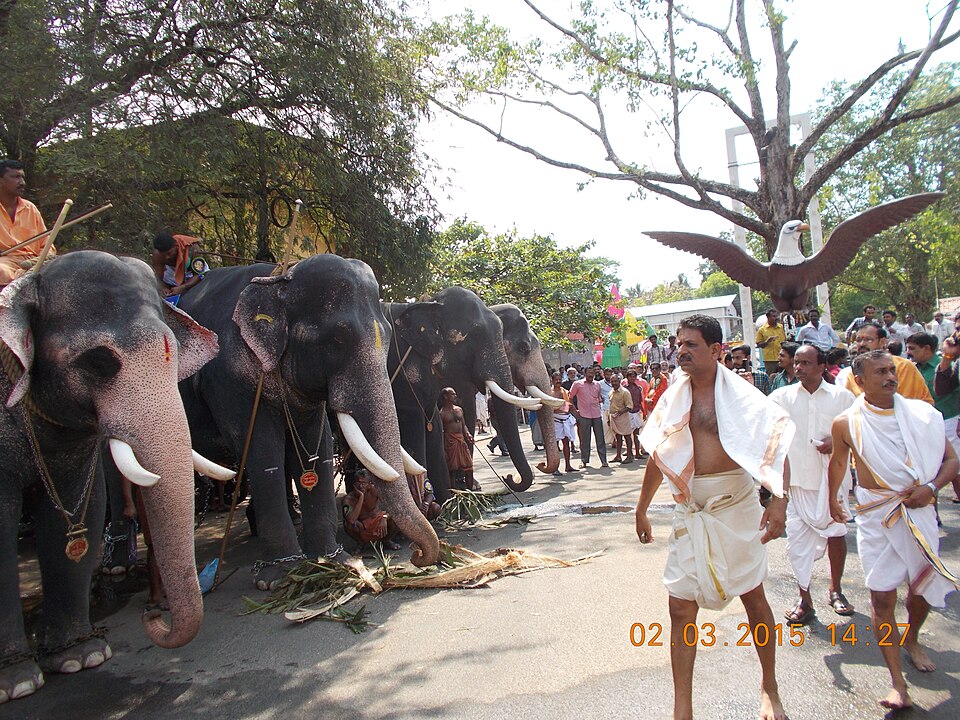
Vishnu's response was immediate. He descended from Vaikunta before Gajendra had finished his prayer, cut the crocodile's head with his Sudarshana Chakra and liberated Gajendra. This story is commemorated at Guruvayur every Ekadasi — which is why the temple's elephants are not merely ceremonial. They are living embodiments of Gajendra — permanently connected to Vishnu's most celebrated act of unconditional grace.
Planning for Guruvayur Ekadasi 2026
Book accommodation a minimum of 3–4 months in advance. Book your darshan slot the moment the online calendar opens — typically 6–8 weeks prior. If driving, use Chavakkad or Kunnamkulam as a base and use local transport on Ekadasi day. Parking near the temple is effectively impossible from before 5 AM on this day.
Punnathur Kotta — The Guruvayur Elephant Sanctuaryപുന്നത്തൂർ കോട്ട — ഗജസ്ഥലി, ദൈവദാനം
Four kilometres from the main temple, on the grounds of Punnathur Kotta — a former royal palace — lives the world's largest collection of temple elephants. Over sixty elephants, all donated to the temple deity by devotees as the ultimate act of dedication, are cared for here by mahouts who have worked with these specific animals for years, sometimes decades.
A visit to Punnathur Kotta at dawn, when the elephants are being bathed and fed in the forest clearings around the estate, is an experience that no guidebook quite captures. These are not zoo animals behind barriers. They are temple residents with individual personalities, histories and relationships with the mahouts who care for them. Punnathur Kotta is open to visitors of all faiths — approximately 8:00 AM to 5:00 PM, with a modest entry fee. Best time: 8:00–10:00 AM.
How to Reach Guruvayur — Complete Travel Guideഗുരുവായൂർ എത്തിച്ചേരാൻ
By Train
The nearest major railway stations are Shoranur Junction (20 km) and Thrissur (29 km), both with excellent connectivity to all major cities. From either station, frequent KSRTC and private buses run directly to Guruvayur. There is also a dedicated Guruvayur Railway Station on the Shoranur–Guruvayur passenger line — a 45-minute scenic journey that deposits you steps from the temple.
By Air
Nearest airports: Cochin International Airport (COK) at approximately 90 km (2 hours by road) — the best option for most travellers. Calicut International Airport (CCJ) at 150 km (3 hours). Prepaid taxis from Cochin airport to Guruvayur are available directly at the taxi counters.
By Road
- From Thrissur: 29 km via NH 544. KSRTC buses every 20–30 minutes. Journey: 45–60 minutes.
- From Kochi: 80 km via NH 544. Journey: 1.5–2 hours by road or taxi.
- From Calicut: 120 km. Journey: 2.5–3 hours.
- From Coimbatore: 130 km via Palakkad. Journey: 3 hours.
- Parking: Large car parks 500 m from the temple. On Ekadasi and festival days, use public transport — parking fills by 5 AM.
Insider Tips — What Nobody Tells You Before You Visitആരും പറയാത്ത കാര്യങ്ങൾ
Before You Arrive
- Fast or eat lightly before your visit. A heavy meal before a potentially long queue is physically uncomfortable and spiritually contrary to the tradition. Light food or fasting from midnight is ideal for Nirmalyam darshan.
- Bring exact cash for smaller offerings. Smaller vazhipadu counters often work better with cash. Carry ₹50, ₹100 and ₹500 notes.
- Leave your phone in the hotel if possible. Photography is prohibited inside and the phone creates constant temptation that pulls you out of the devotional experience. Cameras are not permitted in the inner areas.
- Dress from the start. Changing traditional attire in temple corridors while managing bags and children is stressful. Dress before you leave your accommodation.
Inside the Temple
- Always move clockwise. Never cut against the crowd flow — it disrupts the energy alignment and creates dangerous congestion.
- Your sanctum view may be brief — let it be enough. In a busy queue, direct darshan may last only 10–20 seconds. Do not spend those seconds trying to memorise the visual. Just be present. Let go of effort.
- Receive theertham with both hands cupped, right hand underneath. The sacred water from the copper vessel should be drunk in the moment, not stored for later.
- Find the Namaskara Mandapam. This separate hall for seated prayer just outside the sanctum is far less crowded than the main queue and allows extended, undisturbed meditation. Most visitors don't know about it — use it.
After Darshan
- Have the temple prasad before leaving. The aval (flattened rice) prasad distributed to devotees is simple, sattvic and genuinely delicious. Do not skip it.
- Sit quietly for 15 minutes before re-entering the world. The transition from sacred space back to traffic and noise is jarring. Give yourself a buffer.
- Visit the eastern gopuram at dusk if you are staying overnight — lit against the evening sky, with bells carrying from inside, it is one of the most beautiful sights in Kerala.
Guruvayur Temple — Frequently Asked Questionsഗുരുവായൂർ — സ്ഥിരം ചോദ്യങ്ങൾ
📖 Read more deep articles on Kerala temples and pilgrimage.
Back to All Blogs →