Overview
One of the World’s Largest Annual Pilgrimages
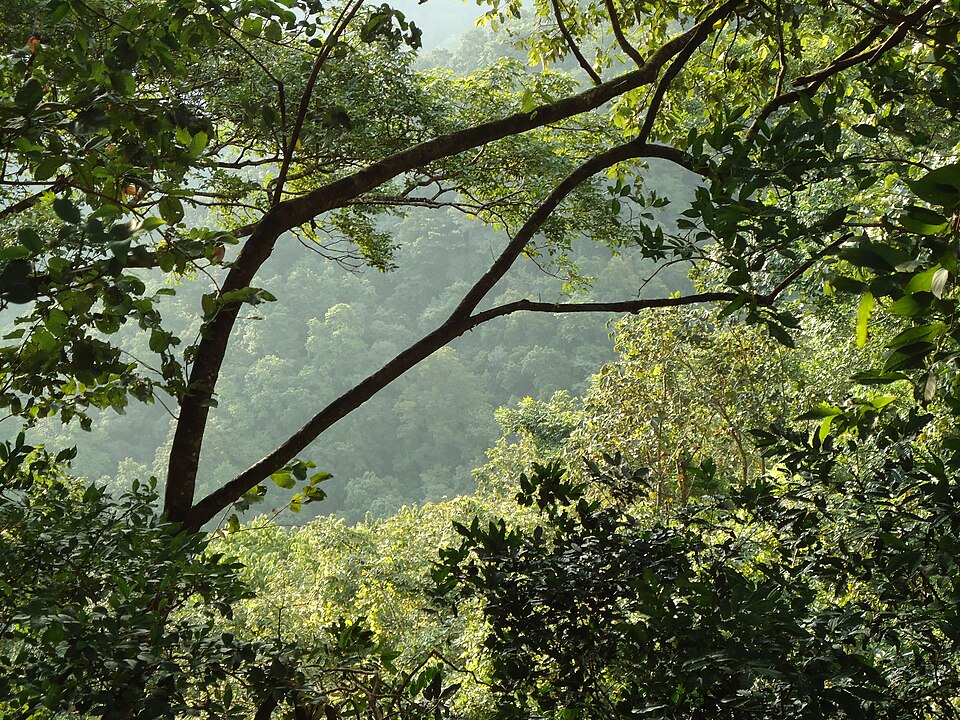
Deep inside the Western Ghats of Kerala stands one of the most visited Hindu pilgrimage sites in the world — the Sabarimala Sree Dharma Sastha Temple, dedicated to Lord Ayyappa. The temple sits inside the Periyar Tiger Reserve at an altitude commonly cited around 914–1,260 metres (sources vary slightly), and during its main Mandala–Makaravilakku season it draws crowds regularly described in the tens of millions, making it one of the largest annually recurring pilgrim gatherings anywhere.
What distinguishes Sabarimala is not scale alone. Every pilgrim wears black or blue, carries the ritual Irrumudi bundle, undertakes weeks of preparatory discipline, and addresses fellow devotees simply as ‘Ayyappa’ regardless of background. The pilgrimage also passes through Erumeli, home to the Vavar Swamy shrine associated with Ayyappa’s legendary companion — a long-standing interfaith element of the route.
Sabarimala’s exact opening and closing dates follow the Malayalam calendar and are confirmed by the Travancore Devaswom Board (TDB) shortly before each season — they are not fixed Gregorian dates and can shift by a day from year to year. The dates given throughout this guide for the 2026–27 season reflect the figures most consistently reported by pilgrimage-advisory sources as of mid-2026. Always confirm the final schedule on the official portal, sabarimalaonline.org, before finalising travel.
2026–27 Season Dates
Sabarimala 2026–27 Mandala & Makaravilakku Dates
Based on the consistent pattern reported across multiple current pilgrimage-advisory sources (and matching the temple’s customary calendar cycle), the 2026–27 season is expected to follow this schedule:
| Event | Expected Date | Notes |
|---|---|---|
| Mandala Season Opens | ~16–17 Nov 2026 | 41-day Mandala Vratham period begins · virtual queue mandatory |
| Karthika Pournami | ~24 Nov 2026 | Full-moon day within the Mandala season |
| Mandala Pooja | ~27 Dec 2026 | Closing ceremony of the 41-day Mandala season |
| Makaravilakku Season Opens | ~30 Dec 2026 | Thiruvabharanam procession departs Panthalam Palace |
| ⭐ Makaravilakku Festival | 14 Jan 2027 | Peak day · Makara Jyothi · coincides with Makar Sankranti |
| Makaravilakku Season Closes | ~20 Jan 2027 | Temple closes until the next monthly opening |
| Monthly Masapirappu | 1st–5th of each Malayalam month | Year-round monthly openings outside the main season |
| Vishu Opening | Mid-April (annual) | Short opening · typically the quietest darshan window |
Multiple current pilgrimage-information sites (including sreeayyappatemple.com and darshansbooking.com, both updated in 2026) independently report the Mandala season opening in mid-November 2026 and the Makaravilakku festival on 14 January 2027, consistent with the temple’s recurring Malayalam-calendar cycle. One source lists the opening as 16 November, another as 17 November — a one-day variance typical of early advisory estimates before TDB’s formal notification. Treat the exact day of Mandala opening as approximate until TDB publishes its official notification, usually a few weeks ahead of the season.
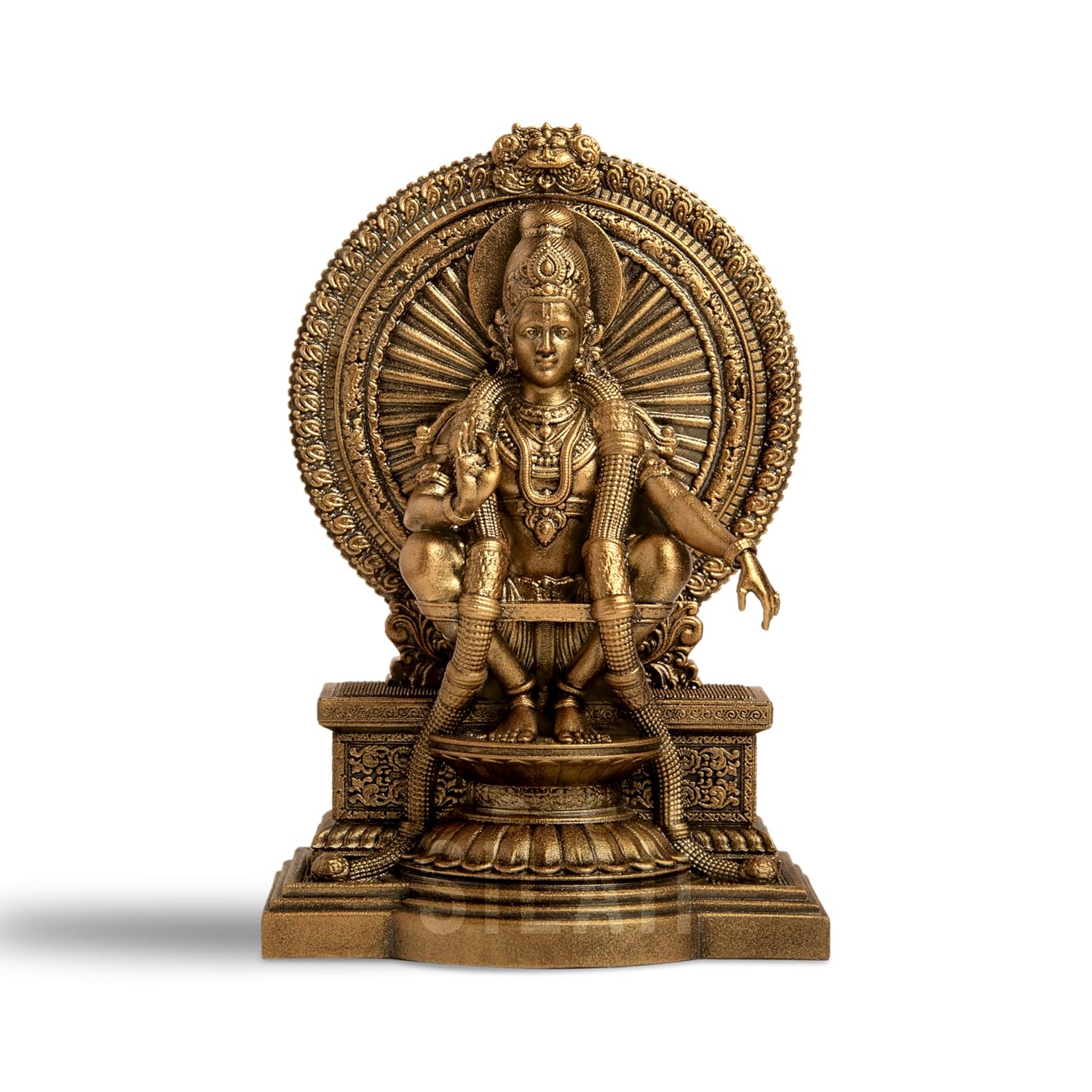
Sabarimala pilgrimage books, sacred Ayyappa idols, traditional black Vratham dress and Mala necklaces for the 41-day deeksha.
View on Amazon →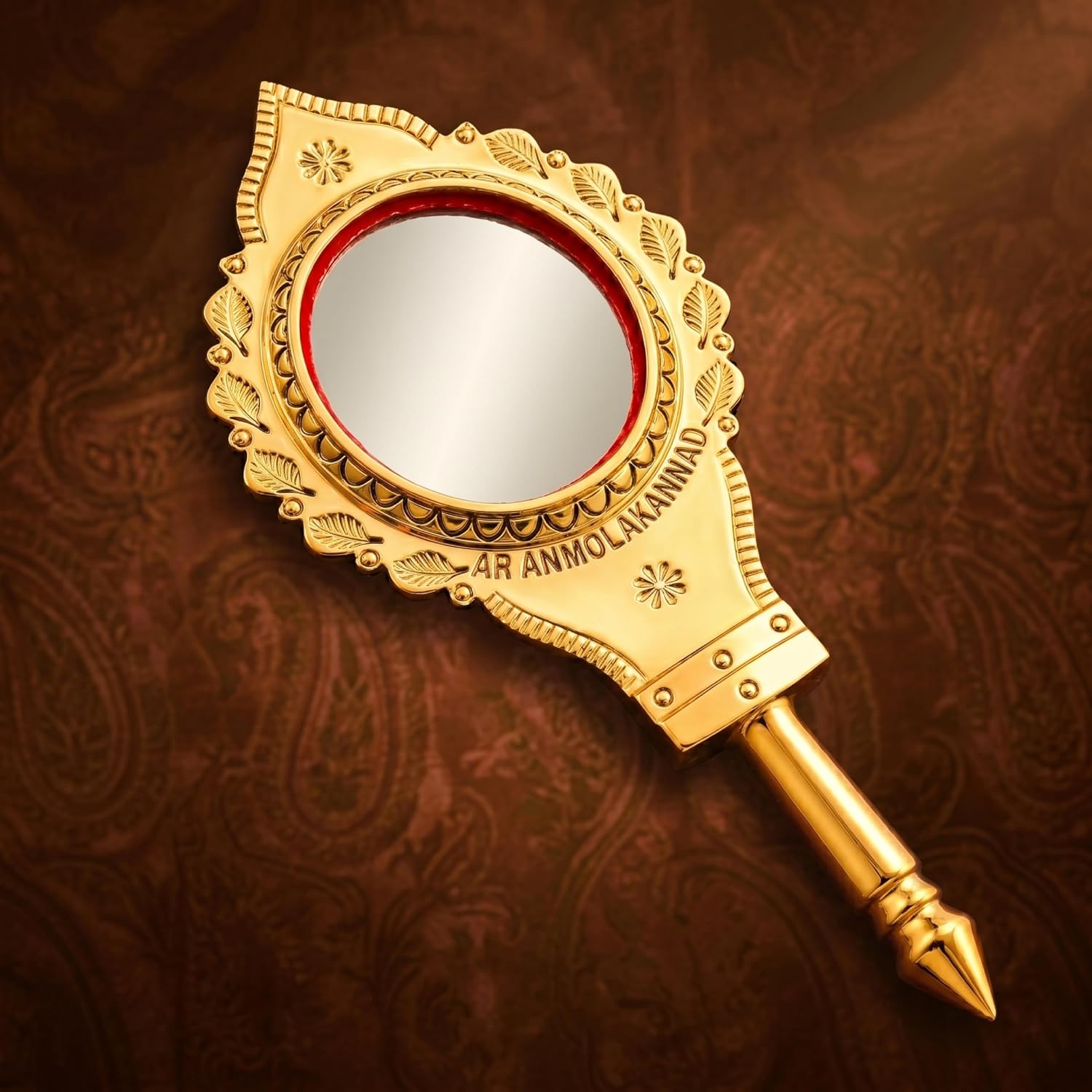
GI-tagged sacred metal mirror handcrafted by artisans near the Parthasarathy Temple — among Kerala’s most auspicious heirlooms.
View on Amazon →Affiliate link — we earn a small commission at no extra cost to you. See our Affiliate Disclosure.
Legend
The Legend of Lord Ayyappa
The Cosmic Birth
Lord Ayyappa, also known as Dharmashastha, Manikandan and Hariharan, is described in tradition as born of the union of Shiva and Mohini — the female form of Vishnu — symbolically uniting Shaivism and Vaishnavism. His purpose, per the legend, was to defeat the demon Mahishi. After doing so in the forests of the Western Ghats, he is said to have chosen Sabarimala as his eternal abode.
The Royal Prince of Pandalam
A parallel tradition treats Ayyappa as a historical prince found as an infant near the Pamba river and adopted by the royal family of Pandalam. The Thiruvabharanam — his golden ornaments — are kept at Pandalam Palace and carried in a multi-day procession to Sabarimala every Makaravilakku season, arriving in time for the festival.
Vavar and the Interfaith Tradition
Sabarimala’s pilgrimage route passes through Erumeli, where a shrine associated with Vavar — described in tradition as a companion of Ayyappa — is customarily visited by pilgrims. This is widely cited as one of the clearest examples of an interfaith element embedded directly into a major Hindu pilgrimage route.
Swamiye Saranam Ayyappa — I take refuge in you, O Lord Ayyappa.
Traditional pilgrim invocation, chanted throughout the journey to SannidhanamSacred Forest
The Living Forest — Periyar Tiger Reserve
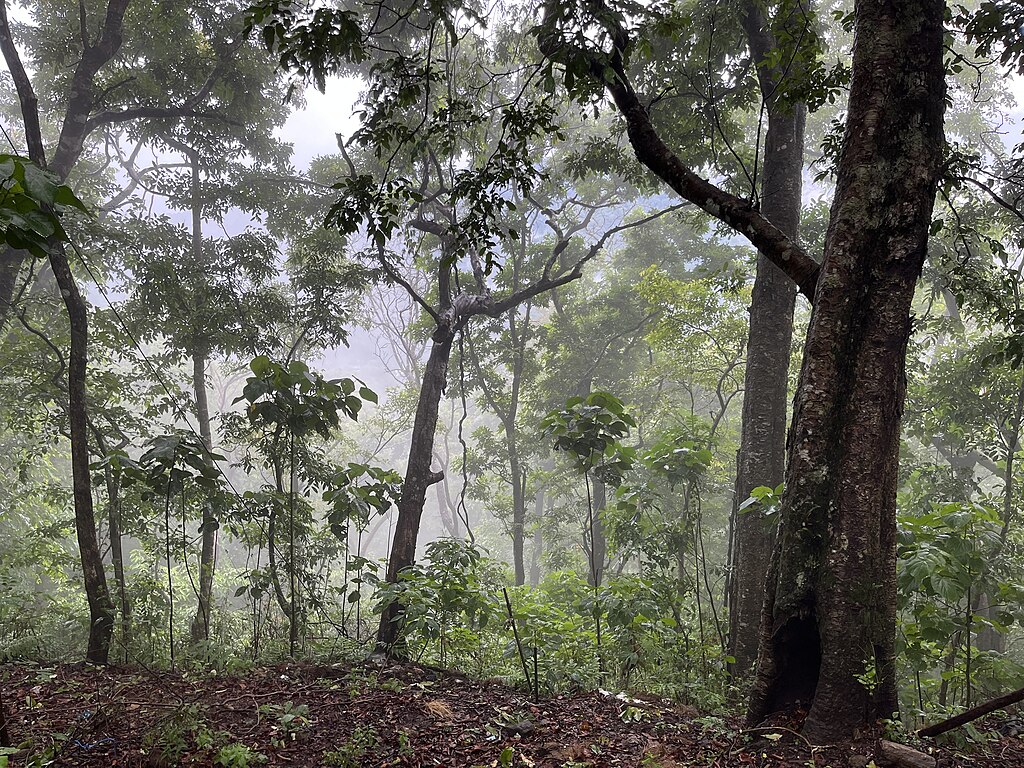
The Sabarimala complex sits inside the Periyar Tiger Reserve, one of the Western Ghats’ significant protected forests, home to Asian elephants, Bengal tigers, leopards, Indian gaur and a wide range of bird and butterfly species. Wild elephants occasionally cross the pilgrim path; devotees are asked to stop, remain silent and maintain distance until animals move on.
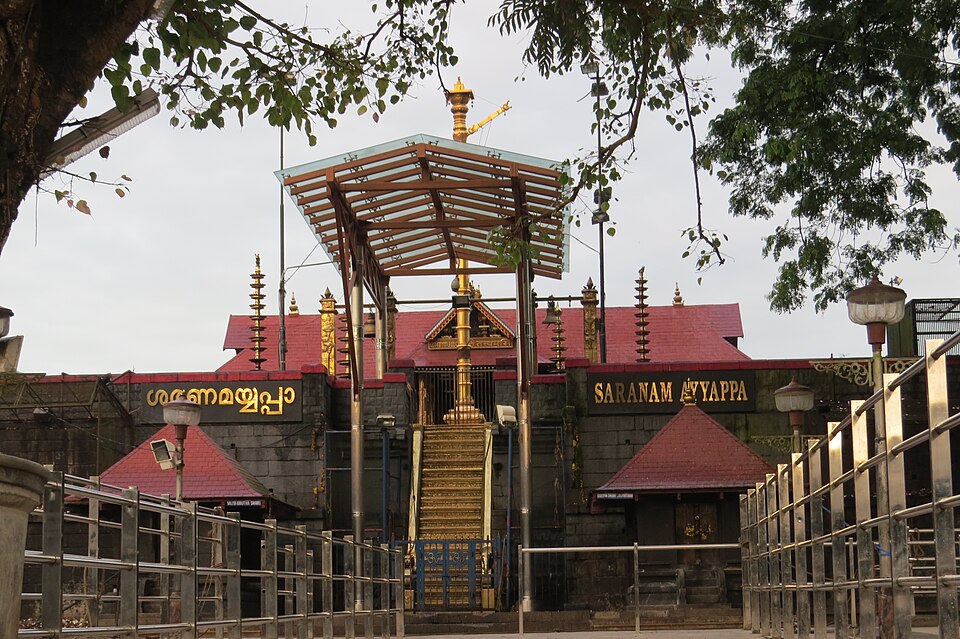
- Carry all waste out — no plastic on the trail or at Sannidhanam
- Stay on marked paths — do not stray into forest buffer zones
- Keep distance from any wildlife encountered, especially elephants
- Avoid single-use plastic bottles — refill at drinking-water stations
Preparation
The 41-Day Vratham
The pilgrimage traditionally begins 41 days before departure with the Mandala Vritham — a period of vegetarianism, celibacy, daily temple visits, cold pre-dawn baths and simplified living, undertaken after the ceremonial tying of the Mala (a rudraksha, tulsi or sandalwood necklace) at a local Ayyappa temple.
- Strict vegetarianism, no alcohol, for the full 41 days
- Pre-dawn cold-water bath daily
- Black or dark blue clothing from the day the Mala is tied
- Celibacy and simplified daily living
- Continuous recitation of Swamiye Saranam Ayyappa
- No cutting of hair or beard until the pilgrimage is complete
The Sacred Bundle
The Irrumudi Kettu
Before ascending the 18 sacred steps, pilgrims carry the Irrumudi Kettu — a two-compartment cloth bundle on the head, prepared with the guidance of an experienced Guruswami. The front section (Munmudi) contains a ghee-filled coconut and puja materials; the rear (Pinmudi) holds personal items.
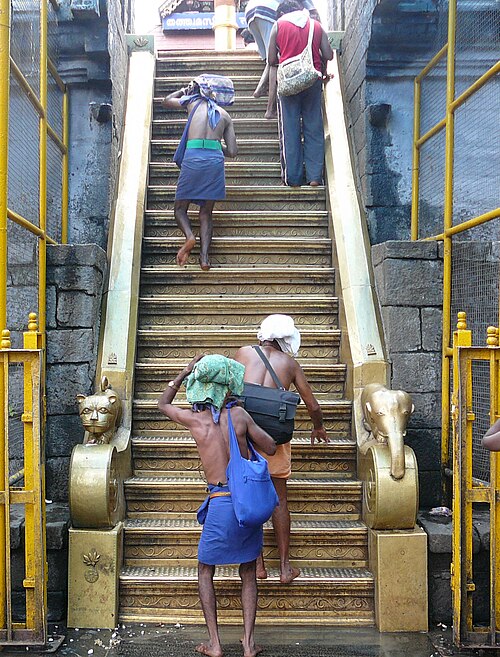
Photo: Sailesh, CC BY-SA 3.0, via Wikimedia Commons
Pathinettam Padi
The 18 Holy Steps
The Pathinettam Padi has been clad in panchaloha (a five-metal alloy) since 1985, replacing the earlier granite surface. Only pilgrims carrying the Irrumudi Kettu on the head may ascend, and each step is traditionally understood to represent a stage of inner discipline on the path to darshan.
🪜 Pathinettam Padi — The 18 Sacred Steps
Traditionally associated with stages of inner discipline en route to the sanctum.
The Sacred Abode
Sannidhanam — The Temple Complex
The Sannidhanam is the summit plateau where the temple complex stands. The golden Dwajasthambam (flagstaff) becomes visible as pilgrims approach, typically triggering collective chanting of ‘Swamiye Saranam Ayyappa!’
🛕 Sannidhanam — Key Shrines
Central Ritual
Neyyabhishekam
The Neyyabhishekam is the offering of the pilgrim’s ghee to Lord Ayyappa inside the sanctum — the ritual climax of the pilgrimage.
- After a ritual bath at Bhasmakulam, the Guruswami opens the Irrumudi and collects each pilgrim’s ghee
- The group joins the Neyyabhishekam queue, separate from general darshan
- Inside the sanctum, the priest pours the ghee over the idol with Sanskrit mantras
- A portion is returned as prasadam
- Empty coconut shells are placed in the Aazhi fire pit
Sacred River
The Pamba River
Before the ascent, pilgrims take a ritual bath in the Pamba river, popularly referred to in devotional tradition as the Dakshina Ganga of the south.
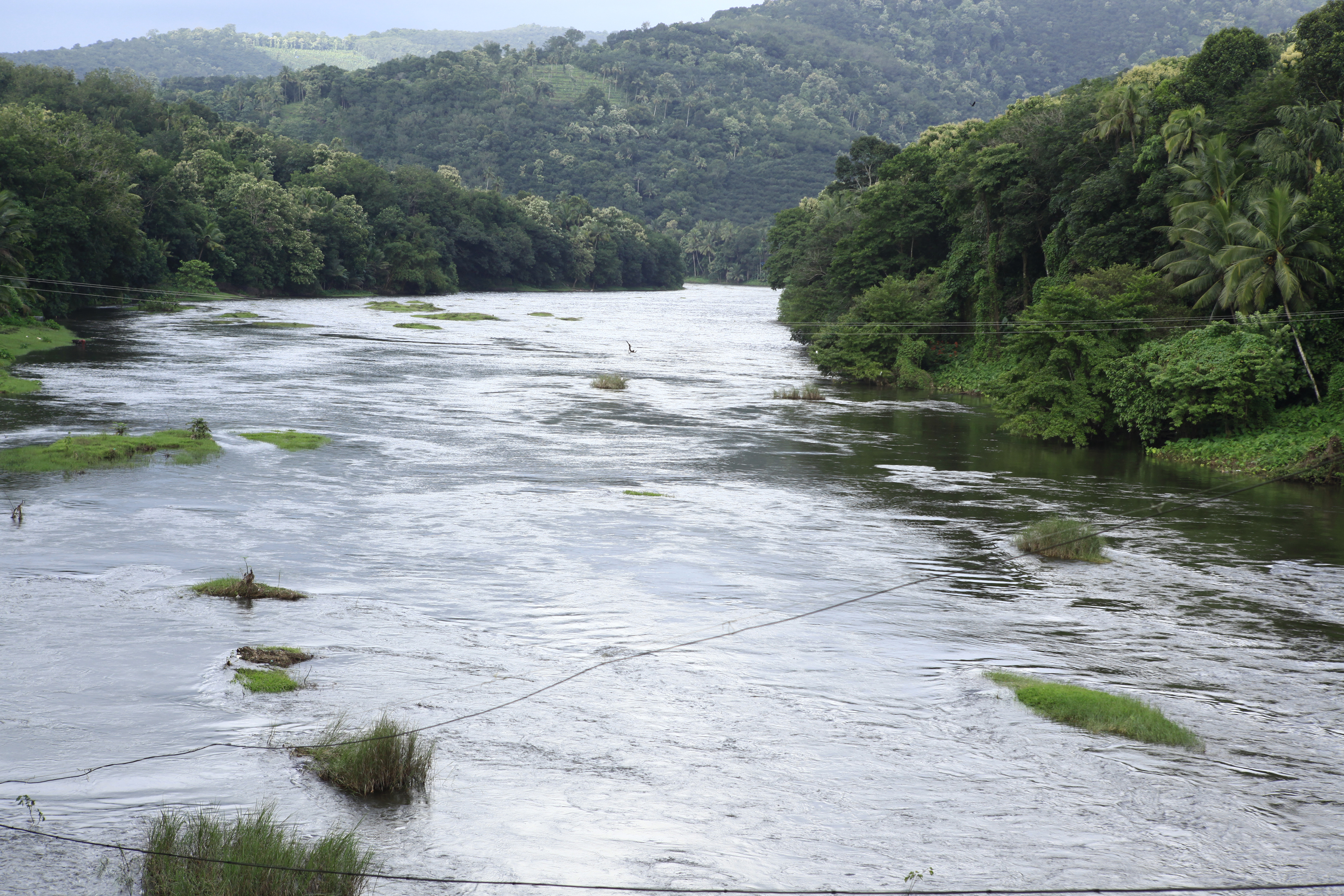
- Use only designated bathing ghats
- Avoid chemical soap or shampoo in the river
- Carry all plastic waste away from the riverbank
Trek Route
Pamba to Sannidhanam
The main route from Pamba to Sannidhanam is commonly cited at roughly 4–5 km, with an elevation gain of around 450 metres. It typically takes 1.5–2.5 hours on foot; a helicopter service also operates from Pamba for pilgrims unable to make the trek.
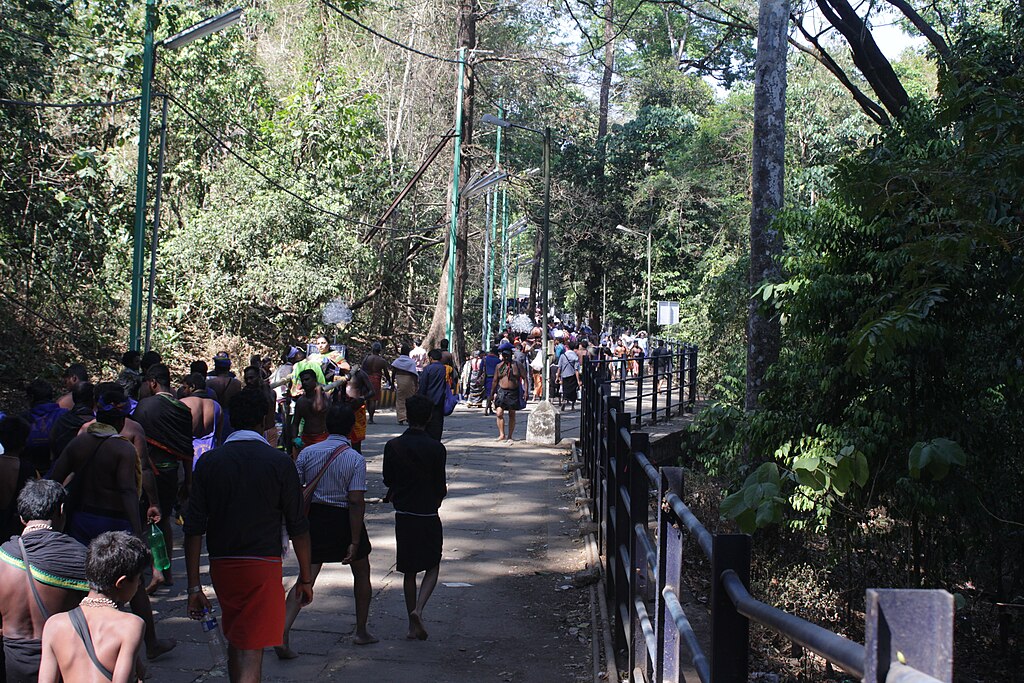
A helicopter service between Pamba and Sannidhanam is typically available each season for pilgrims unable to trek, and must be pre-booked. Carrying the Irrumudi remains required even for helicopter pilgrims. Check the current season’s booking arrangements on the official TDB channels.
When to Visit
Best Time to Visit Sabarimala
Getting There
How to Reach Sabarimala
All pilgrims reach Pamba via Nilakkal, the last point private vehicles can typically use during the season. Free shuttle buses connect Nilakkal to Pamba.
| From | Approx. Distance | Notes |
|---|---|---|
| Kochi Airport (COK) | ~155 km | Taxi or KSRTC bus via Erumeli |
| Thiruvananthapuram Airport | ~175 km | Taxi or bus via Adoor and Erumeli |
| Chengannur Railway Station | ~85 km | Nearest major railhead; taxi or bus onward |
| Kottayam Railway Station | ~85–100 km | Bus via Erumeli |
Practical Tips
Practical Tips for Pilgrims
What to Carry
- Irrumudi Kettu, prepared with priestly guidance
- Black or dark blue clothing, plus a fresh change
- Printed virtual queue confirmation and valid ID (Aadhaar or passport)
- Lightweight rain protection — conditions can be cold and wet
- Reusable water bottle, personal medicines, torch and power bank
Conduct
- Address fellow pilgrims as ‘Ayyappa’
- Photography inside the sanctum is not permitted
- Maintain distance from any wildlife encountered on the trail
Devotional books, black dress sets, Mala necklaces and Vratham preparation kits.
Shop on Amazon →
GI-tagged sacred metal mirror handcrafted near the Parthasarathy Temple.
Shop on Amazon →Affiliate link — we earn a small commission at no extra cost to you. See our Affiliate Disclosure.
Sacred Rules
Do’s & Don’ts
- Complete the 41-day Vratham before the pilgrimage
- Have the Mala tied by a priest at your local temple
- Carry the Irrumudi Kettu to ascend the 18 steps
- Carry out all waste from the forest route
- Bring non-vegetarian food during the Vratham period
- Photograph inside the sanctum
- Use single-use plastic inside the Tiger Reserve
- Approach or disturb wildlife on the trail
Nearby
Destinations Near Sabarimala
“Swamiye Saranam Ayyappa — before the Lord of the Forest, there is no caste, no creed, no nation.”
Traditional pilgrim invocation
FAQ